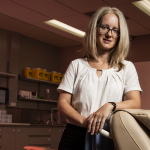
How David Tscharke’s own MS is driving his research forward
“On the bright side, it’s not a brain tumour”. That’s how Professor David Tscharke’s GP broke the news that he had evidence of multiple sclerosis (MS) on an MRI scan.
For David, the diagnosis has been life-changing – in more ways than one. Like everyone with MS, he’s had to learn how to live with his symptoms. But the disease has also taken his work in a new direction – instead of working solely as a virologist, he is now an MS researcher too.
David’s own experiences with MS, and the challenges of finding the right treatment, inspired him to get involved in MS research.
The first medication he was prescribed came with some uncomfortable side effects.
“It’s not very nice,” remembered David. “It makes you feel like the day before you have the flu, every single day.”
David had to change to a different medication, then another, then another. When he finally found one that worked, he caught a common virus – which meant he had to change medication again or risk a devastating brain infection.
Today, he’s on the last drug available to him. If he develops any further complications, there will be no treatments left.
David’s difficulties of swapping from one medication to another is something many people with MS can relate to. It’s also what’s driving him to solve this problem.
Donations to MS Research Australia are powering David’s research. Right now, those donations are funding his investigation into whether a new kind of blood test could help people with MS identify the best medication to be on.
He is researching whether the blood test can detect traces of bacteria and viruses that may put people on certain MS medications at risk. His goal is to find a way to spot them early, long before they cause a problem.
David also believes this blood test technology could be used to track how well a person with MS is responding to a new treatment. If he’s right, people with MS could have a way to know if their medication is effective or not before a relapse occurs.
David is hopeful his research could lead to a breakthrough. It could change his own life, and countless others living with MS.
He’s also humbled by the opportunity to work on something so personally important, and grateful to MS community for making this research possible – because your support truly is vital.
“It’s a real privilege to use all the experience I have in research and apply that to a disease I really understand. I’d like to thank everyone who’s donated for helping make that possible,” said David.
To find out more about how your support is powering innovative research into MS – and read about the latest breakthroughs – download our 2020 Progress Impact Report.