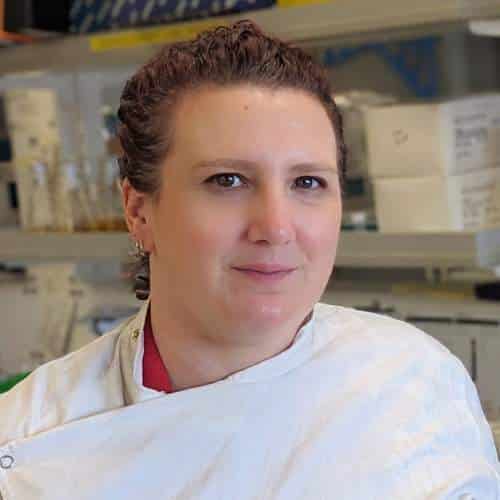
Dr Jessica Fletcher’s research focuses on finding ways to repair the brain in multiple sclerosis (MS), where current treatments cannot fully stop disease progression. In MS, the immune system mistakenly attacks the protective coating around nerves in the brain, spinal cord and optic nerves, called myelin. This project aims to boost the activity of myelin-producing cells, called oligodendrocytes, to encourage new myelin growth.
Dr Fletcher’s team will look for specific molecules inside oligodendrocytes that play a role in the myelin repair process. They will focus on a key molecule called Olig2, which controls whether a cell can make myelin and how much it will produce. By adjusting the activity of Olig2, the team hopes to stimulate myelin regeneration.
The goal is to develop precise treatments that target only the cells involved in myelin repair, avoiding other parts of the body.
This approach could lead to development of effective and safe therapies to repair myelin in people with MS.
Progress
Dr Fletcher and her team have made strong early progress in this project, establishing the models and methods needed to study how myelin is formed and repaired. They have developed new laboratory models that allow them to observe oligodendrocytes in real time and have recruited a team of researchers and students to carry the work forward.
Using these models, the team has begun identifying when key biological pathways are most active during the process of myelin formation. Their findings show that one pathway, called MAPK/ERK, is particularly important at two specific stages of oligodendrocyte development – early, when cells are deciding their role, and later, when myelin is growing and being maintained. Targeting the pathway at these stages changes how much myelin is produced.
The team has also confirmed that another pathway, Akt/mTOR, plays an important role throughout all stages of myelin development. This helps build a clearer understanding of how different biological systems control myelin repair and when interventions may be most effective.
To support this work, the team has developed new tools that allow them to study how myelin is formed in much greater detail. These tools are helping them identify the key molecules that work together to drive myelin production.
The project is now moving into the next phase, where the team will focus on identifying these molecules and testing how they can be targeted to improve myelin repair. This work is helping build a clearer picture of when and how to support myelin-producing cells, with the long-term goal of developing more targeted treatments to repair damage in MS.
The team also has scientific manuscripts in preparation and under review, reflecting the strong progress made to date and helping to share these findings with the wider research community.
Laboratory research that investigates scientific theories behind the possible causes, disease progression, ways to diagnose and better treat MS.
Lab to clinic timeline
10+ years
Translational
Research
Research that builds on fundamental scientific research to develop new therapies, medical procedures or diagnostics and advances it closer to the clinic.
Lab to clinic timeline
5+ years
Clinical Studies and Clinical Trials
Clinical research is the culmination of fundamental and translational research turning those research discoveries into treatments and interventions for people with MS.