Australian researchers are growing ‘mini brains’ to help solve one of the biggest challenges in multiple sclerosis (MS) research – repairing damage caused by MS.
The research, funded through MS Australia’s mid-year grants round and based at The Florey Institute of Neuroscience and Mental Health, will investigate how the brain naturally produces myelin, the protective coating around nerve fibres that is damaged by MS.
While existing MS treatments can reduce relapses and slow disease activity, there are no therapies currently available that are capable of repairing the damage caused by MS.
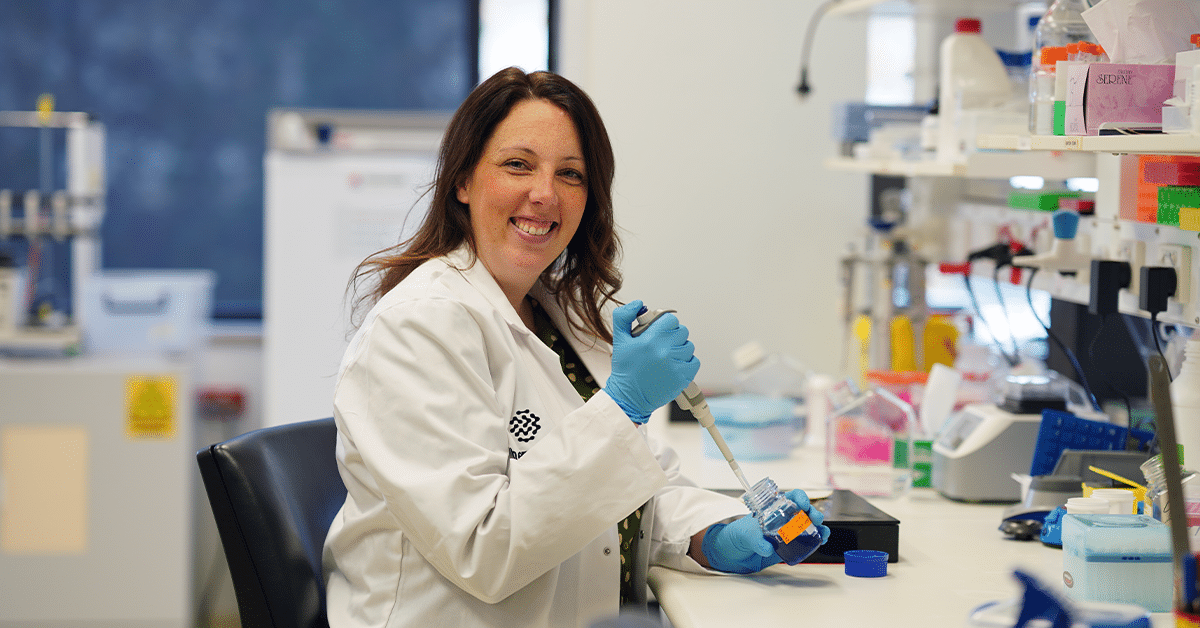
Led by Dr Samantha Barton, the research uses human stem cells to grow three-dimensional laboratory models of the human brain.
These ‘mini brains’ give researchers a unique window into how myelin develops in the human brain.
Dr Barton said the research could help pave the way for future therapies that repair damage caused by MS.
“As a researcher, it’s incredibly rewarding to ask questions that have never been answered before,” Dr Barton said.
“Current treatments target the immune system, but they can’t repair the damage that has already occurred.”
“We’ve developed laboratory-grown brain models that allow us to study how human myelin forms in ways that aren’t possible using conventional laboratory techniques or animal models.”
“By understanding the genes and biological pathways involved in myelin formation, we hope to discover new ways to promote myelin repair.”
MS Australia Deputy Head of Research Dr Fiona McKay said the project addressed the top research priority identified by people affected by MS through MS Australia’s national research priority survey.
“When we asked people affected by MS which research areas mattered most to them, repair and regeneration emerged as the top priority.”
“Research like Dr Barton’s is improving our understanding of how myelin forms and how it may one day be repaired.”
“Supporting discovery research like this builds the knowledge needed to develop the next generation of treatments for people living with MS.”
Dr Barton’s project is one of three research initiatives funded through MS Australia’s 2026 Mid-Year MS Research Grants Round, which invests in early-career researchers and innovative ‘blue sky’ ideas with the potential to shape the future of MS research.
The round includes two Incubator Grants, which help researchers generate the early evidence needed to pursue larger research programs, and a Postgraduate Scholarship supporting the next generation of MS researchers.
MS Australia CEO Rohan Greenland said investment in research remains critical to improving outcomes for people living with MS.
“Every breakthrough in MS research begins with researchers asking questions no one has answered before.”
“MS Australia is committed to supporting Australia’s leading researchers as they tackle some of the biggest unanswered questions in MS.”
OTHER PROJECTS FUNDED IN THE 2026 MID-YEAR MS RESEARCH GRANTS ROUND
How genes and Epstein-Barr virus interact in multiple sclerosis
Dr Carla Proietti – Institute for Molecular Bioscience, The University of Queensland, QLD
Although almost everyone is infected with Epstein-Barr virus (EBV), a known risk factor for MS, only a small proportion of people develop MS. This project will investigate how inherited genetic factors influence the immune response to EBV and contribute to the development of MS. Dr Proietti and her team will combine advanced genetic analysis with profiling of the antibody response to EBV and human proteins to uncover biological mechanisms linking EBV infection to MS.
“We know Epstein-Barr virus is one of the strongest risk factors for MS, but we still don’t understand why only some people go on to develop the disease,” said Dr Proietti. “Our research will investigate how a person’s genetic makeup shapes their immune response to EBV and how this may contribute to the development of MS. By answering these questions, we hope to lay the foundation for earlier diagnosis, more personalised care and, ultimately, better treatments.”
Improving spinal cord imaging to better track MS progression
Dr Tal Koren – Brain and Mind Centre, The University of Sydney, NSW
This project aims to improve how spinal cord damage is detected and measured in people with MS. Dr Tal Koren and his team will use advanced MRI and artificial intelligence to identify and track spinal cord damage more accurately over time. The findings could improve how disease progression is monitored and help clinicians determine whether treatments are working effectively or need to be changed.
“By improving how we image the spinal cord, we hope to better understand how spinal cord damage contributes to disability over time. This could help clinicians monitor disease more accurately, identify people at greater risk of progression, and uncover new biological pathways that may become future treatment targets,” said Dr Koren.