MS Australia has awarded three new grants for ‘blue sky’ ideas and early career research, spanning the role of Epstein-Barr virus in MS, myelin in mini-brains, and harnessing AI for more sensitive monitoring of MS.
- MS Australia has awarded three new grants investing in promising new research ideas and early-career researchers.
- Incubator grants will fund innovative research on nerve growth and repair and the role of viral infection in MS.
- A postgraduate project will harness AI for more sensitive monitoring of MS.
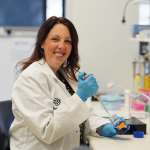
Through its mid-year grants, MS Australia is investing early in promising research ideas and researchers at the start of their careers, to help drive the next wave of innovation and leadership in MS research. In July 2026, three grants totalling $170,000 were awarded, including Incubator grants to Dr Samantha Barton and Dr Carla Proietti, and a Postgraduate scholarship to Dr Tal Koren.
Incubator grants explore new ‘blue sky’ ideas in MS, generating the initial evidence required for larger programs of work. Dr Barton is using mini-brains grown from human stem cells to understand the formation of the protective myelin coating around nerves, so that it can be repaired in MS. Dr Proietti is investigating whether Epstein-Barr virus infection sets up harmful immune system responses in the brain that increase the risk of developing MS. Follow the links to read more about these projects.
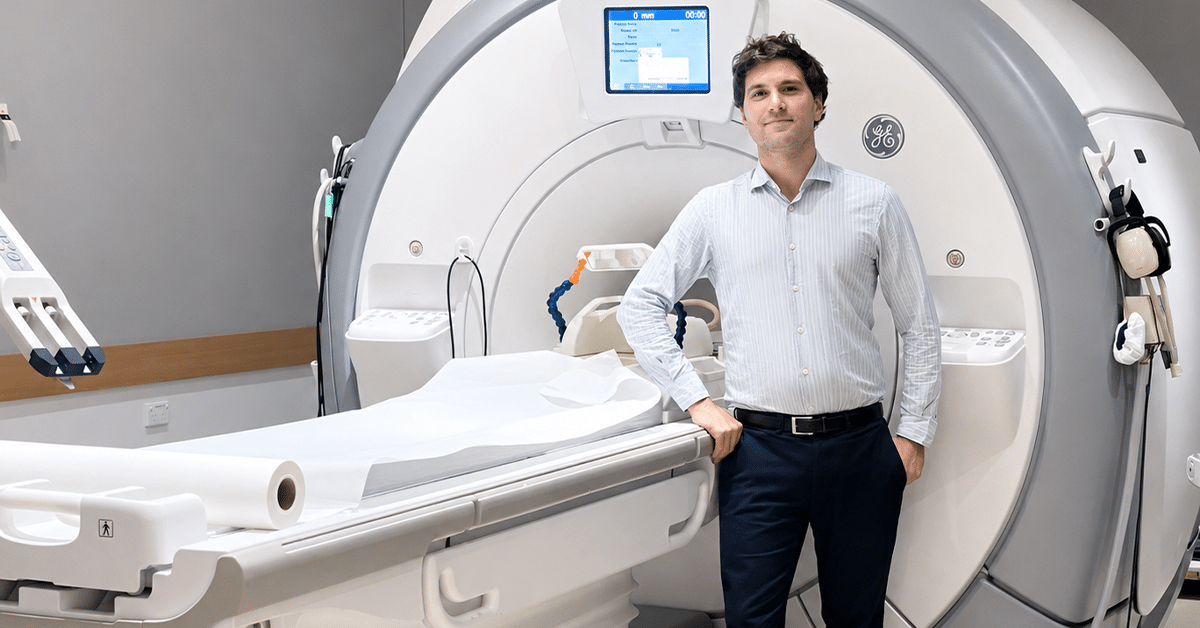
Dr Koren’s scholarship will support his PhD project, addressing an issue faced by the people he cares for in his everyday clinical management of MS. Harnessing AI, he will work to develop more sensitive spinal cord monitoring in MS.
Why do we need better spinal cord monitoring in MS?
MS can cause damage to the spinal cord that is strongly linked to physical disability and progression of the disease. However, current scans of the spinal cord using magnetic resonance imaging (MRI) are not sensitive enough to reliably detect small changes over time. This makes it difficult for doctors to accurately monitor disease activity and progression using spinal cord imaging.
It also impacts the people living with spinal cord involvement in MS. Dr Koren says: “People often express frustration that, despite clear clinical worsening, follow-up MRI scans often fail to show meaningful change. The disconnect between real symptoms and no validation on MRI creates uncertainty. This has an emotional impact and also creates uncertainty about whether treatment is working optimally, and what the next steps should be.”
To address this, Dr Koren aims to improve how spinal cord damage is detected and measured in people with MS.
How will this project improve spinal cord monitoring in MS?
Dr Koren will analyse MRI scans from people who have had spinal cord imaging performed over several years. He will measure the areas of damage in the spinal cord (known as lesions) and changes in the size of the cord over time. These scans will first be analysed manually, and then used to develop and train the artificial intelligence (AI) algorithm – a deep learning model that can automatically detect and track spinal cord damage over time.
In the second phase of the project, Dr Koren will invite people with MS already undergoing routine clinical MRI scans to also undergo a newer, high-resolution 3D MRI scan of the spinal cord.
The scans will be compared to determine whether the newer method can detect more lesions or more subtle changes over time, and test the AI model.
Dr Koren will also explore how these MRI measures relate to disability. Together, the project aims to develop more accurate and automated methods for tracking spinal cord damage in MS, to improve monitoring of disease progression over time.
What does this mean for the MS research community and people with MS?
MS Australia strongly supports the involvement of people with MS in research design, as experts in the lived experience and the unmet needs.
Conversations between people with MS and Dr Koren shaped the design and central research question of this project: can we improve spinal cord imaging to better reflect true disease evolution?
They reinforced the importance of developing MRI measurements that are relevant to disability – especially to changes in mobility and everyday function.
There was support for looking at MRI changes over time, to help improve monitoring and treatment decision-making in routine clinical care. There was also a preference for incorporating research into routine clinical follow-up for convenience. These perspectives were all incorporated into the project design.
MS Australia’s mid-year grant round provides early investment in Australian MS research and researchers towards our long-term goals. In the face of national and international pressures on medical research funding, we remain deeply committed to cultivating the seeds of prevention, better treatments and cures, towards a world without MS.