
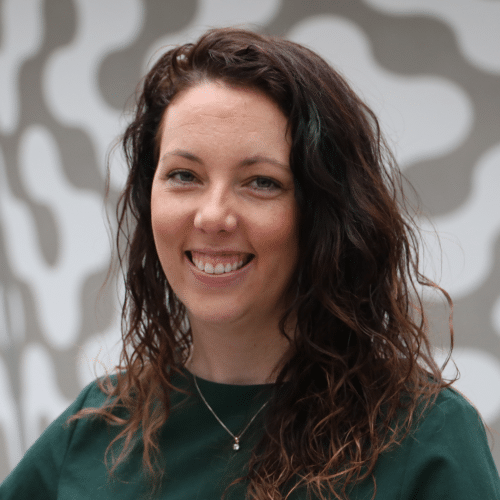
Dr Samantha Barton is a stem cell biologist and researcher at the Florey Institute of Neuroscience and Mental Health at The University of Melbourne. Fascinated by the human brain and its hidden complexity, Dr Barton is particularly passionate about building model systems in the lab.
Multiple sclerosis (MS) is characterised by immune-mediated demyelination and impaired remyelination, leaving axons vulnerable to progressive degeneration. A critical barrier to developing remyelination-promoting therapies is limited understanding of the molecular mechanisms regulating human oligodendrocyte maturation and myelin formation. We will generate three-dimensional mini-brains from human pluripotent stem cells, specifically enriched for oligodendrocyte development and myelination. This human-relevant system recapitulates key aspects of MS-relevant myelination that cannot be modeled in conventional cultures or animal systems.
Using integrated transcriptomic and functional approaches, we will identify genes and regulatory pathways controlling oligodendrocyte maturation and myelin formation. This molecular atlas will reveal targetable mechanisms for enhancing remyelination, which is a therapeutic priority in MS. Our ultimate aim with this research program is to use validated gene targets as a platform for compound screening, enabling rapid identification of drugs that promote oligodendrocyte differentiation and myelin repair.
Multiple sclerosis remains as yet incurable because current therapies target only immune activation, not the underlying failure of remyelination. Without effective remyelination, axons progressively degenerate, driving permanent disability. Understanding the molecular mechanisms controlling human oligodendrocyte maturation and myelin formation is therefore critical to developing remyelination-promoting therapies.
This research will fundamentally advance MS understanding by revealing the genes and regulatory pathways essential for human myelin repair. Current knowledge relies heavily on animal models that poorly recapitulate human myelination biology, limiting translation of findings to patients. Our human stem cell-derived mini-brains provide a physiologically relevant system for identifying these critical mechanisms.
By establishing a comprehensive molecular atlas of human myelination, we will uncover novel therapeutic targets for enhancing remyelination. This will enable screening of compounds that promote oligodendrocyte differentiation and myelin repair, which directly addresses remyelination failure in MS. Ultimately, this work will accelerate development of disease-modifying treatments that halt neurodegeneration and restore function in MS patients.
I am fascinated by the human brain and its hidden complexity. As a stem cell biologist, building model systems in the lab is my scientific passion and I'm very proud of the brain-related model systems we have been able to generate. Our main model system is enriched with myelin, which is quite unique to our lab and is world leading in its sophistication, so it provided the perfect platform to begin asking myelin-related questions. This led us to work alongside neurologists and then from there we connected with consumers and the broader MS community. It has been really rewarding to directly communicate with people we are ultimately trying to help and I'm excited to see our research progress.
I'm a little biased but I think the use of stem cells for disease modelling has revolutionised our understanding of neurological disease, including MS. The ability to grow cells from people affected by disease is unparalleled in the insights it generates. Factoring in the complex genetics of MS, even just being able to generate brain cells in a dish enables complex cellular questions to be asked as well as an amenable system for testing new drugs.
I love that no two days as a scientist are the same. Every day we get to ask questions that have never been answered before - it is a really powerful thing to be able to generate knowledge that doesn't exist yet. The majority of challenges as a scientist are funding based - there just isn't enough research funding to go around, which is challenging and it means a very large amount of my time is spent writing funding applications instead of in the lab doing the experiments.
I am a die-hard Demons supporter!