
When I was first diagnosed, I was terrified. Like so many of us, I went straight to Dr Google. I was searching for one positive story about life with MS. Instead, every story told me my life was over. I felt defeated.
I know now there are many ways to live a good life with MS. Back then, I couldn’t see any of them.
So, this is the story I wish I’d found.
In 2012, I was chasing the adventure of a lifetime, with a one-way ticket to Sydney, £600 in the bank and a map to a fruit farm in Canberra. MS wasn’t part of the plan.
Being heard
For two years, my body kept trying to tell me something. Tingling. Numbness. Twitching. A fatigue so heavy I lived on energy drinks. Then playing Gaelic football in Darwin, my legs buckled underneath me.
I’ve lived with immune thrombocytopenic purpura (ITP), a rare, incurable blood disorder, since I was 15, so I knew something was seriously wrong. At the emergency department, they said I’d sprained my leg. I pushed to be heard, and a haematologist listened – my first act of advocacy.
I was diagnosed with MS in 2014, in a hospital bed on the other side of the world from my family. Seven medical students stood around me as the neurologist broke the news. I felt exposed, small and completely alone in a room full of people. No one should hear that news feeling the way I did. It’s why I care so much about people being diagnosed with dignity and compassion.
Becoming the story
It took three years, but eventually I realised: if I couldn’t find the story I needed, maybe I could become it.
In 2017, I began sharing the highs and lows of living with chronic illness on Instagram (@ms_butterfly89), hoping someone newly diagnosed would feel less alone.
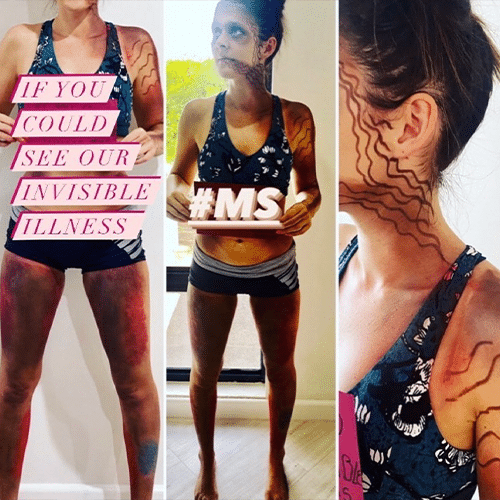
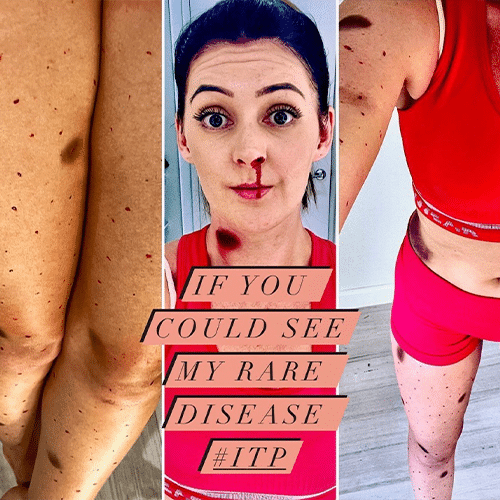
The hardest part to explain is what people can’t see. People see a smiling, healthy-looking woman and assume she’s living well. So in 2020, I painted the numbness, tingling, aching and pain onto my body. I did the same for my ITP.
Sharing those photos felt vulnerable. They even shocked my inner circle. But they became a powerful way to raise awareness.
Fatigue is the most invisible part of all. In my head, I still want to do everything. Some days my body is just like… absolutely not. We negotiate. It usually wins. I’ve learnt that resting doesn’t mean I’m lazy. And when I say no because I’m not up to it, it isn’t because I don’t want to be there. I’m still fun, still driven, still full of ideas. I just pencil in nap times now.
Even my treatment is invisible. Uber drivers taking me to the hospital for treatment have asked if I’m heading in for a shift. “No,” I tell them, “I’m the patient!” Invisible illness problems 101.
The life I couldn’t see
The adventure didn’t end with my diagnosis.
Since then, with a bit of planning, I’ve travelled around Australia and overseas, moved from Darwin to Brisbane and made some amazing new friends along the way. I’ve built a whole life for myself here, a world away from where I started, and I’m so proud of that.
A good week for me looks pretty ordinary, and that’s the point. On Sunday I do my food prep for the week. At work, I love being the glue that helps my amazing team achieve its goals. There’s a physio session in the diary. And at the weekend, I’m out socialising with my friends or having a lazy afternoon on the sofa.
Finding the fun
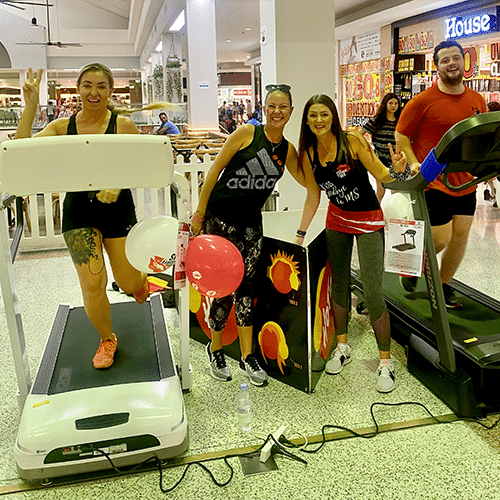
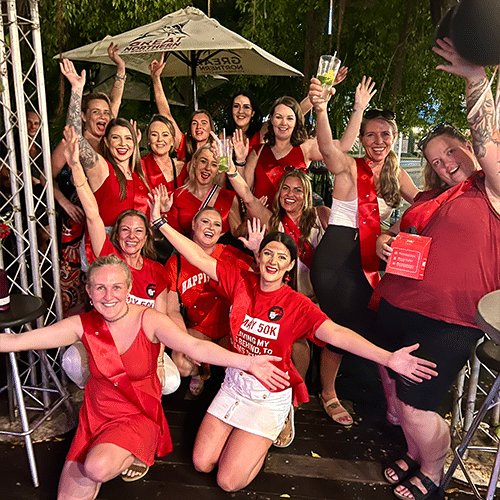
Not everything about MS is heavy. Fundraising is where the fun started for me. Over two years of Kiss Goodbye to MS, my team, “If Sam can do it, you can”, raised more than $25,000 for MS research across three states and the UK. We convinced a Darwin radio presenter to do 50km on a treadmill in a shopping centre whilst broadcasting live, and sixteen of my girlfriends dressed in red for a charity pub crawl to raise extra funds for the campaign.
Every laugh started a conversation about MS, and every dollar brought us closer to one day finding a cure.
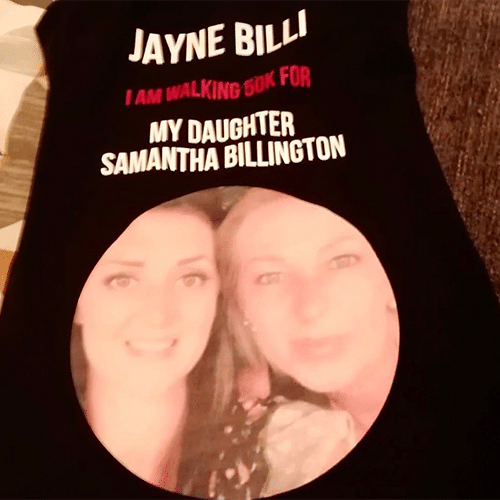
But the moment I’ll never forget had nothing to do with money. My mum surprised me with T-shirts printed with photos of us and the words, “I am walking 50K for my daughter”. There were lots of tears. Seeing the people I love behind the cause meant more than words can say.
From sharing to shaping
Sharing my story opened doors I never expected. I co-authored the Neuro Matters Report, which showed the impact of neurological conditions across Queensland and helped secure a $10.45 million investment in a Queensland Neurological Action Plan.
In 2025, I joined MS Australia’s Lived Experience Expert Panel (LEEP). I bring my story and what I’ve learnt, from navigating the NDIS to the reality of healthcare in remote regions, and from over eight years as company secretary for a large NT not-for-profit supporting people living with disability.
A highlight has been supporting the campaign that helped secure PBS access to Ocrevus and Kesimpta. Our community’s power was so inspiring. I’m on my fourth treatment, so I know first-hand why options matter. With MS, there’s no one-size-fits-all.
Would I change it?
When MS arrived, I had to grieve the life I’d pictured. That took time, and it wasn’t a straight line. I live with two conditions that have no cure. I’ve had relapses and really hard times. I won’t pretend that’s easy, and some days getting through without falling into a heap is the win. It took me a while to believe a different life could still be a good one.
That night with Dr Google, I couldn’t have imagined the life I have now. Fourteen years after that one-way ticket, I’m still living my dream. Australia is home, my friends have become my support network, and life is full, rich and genuinely happy.
Would I change my diagnosis? It might sound crazy, but no. I know not everyone will feel that way, and that’s OK. For me, MS has given me purpose, resilience and a community I’m proud to be part of. Some of my greatest achievements have happened whilst living with it.
There is hope, and none of us has to do this alone. Our voices matter, so keep listening to people with lived experience. We know what we need.
Next time someone newly diagnosed searches for a positive story about life with MS, I hope they find mine and know they’re not alone.