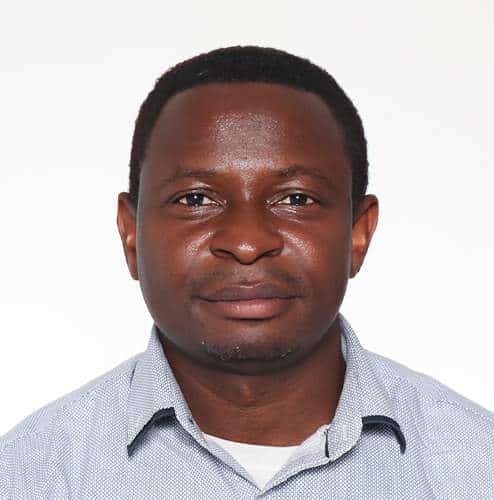
focus area: Better treatments
funding type: Fellowship
project type: Investigator Led Research
One of the major goals in treating relapsing MS is to prevent disability from progressing.
However, there is no way to predict who will experience disability progression while on MS treatment. Also, if an MS treatment fails to prevent disability progression, there is little guidance available to help clinicians find the most effective new treatment strategy for an individual. Dr Valery Fuh-Ngwa’s project aims to address this problem, using several steps.
First, Dr Fuh-Ngwa aims to better understand how disability evolves in different people with relapsing MS, to predict when and in whom disability will progress.
To do this, the team will analyse and model disability progression in very large datasets of people with relapsing MS: the Australian Multiple Sclerosis Longitudinal Study (AMSLS), the international MSBase registry and AusLong.
They will also compare the latest statistical methods, to identify the most accurate and reliable approach for predicting disability progression and estimating treatment effects.
Second, the team will analyse data from people experiencing severe relapses to see which “treatment escalation” strategy is most effective: switching to moderate-efficacy therapies, high-efficacy therapies, or stem cell transplant.
This study will help determine the best time to switch to different therapies, which therapies offer long-term benefits when used first, and which therapies are most effective in preventing disability progression after switching therapies.
Finally, the project will offer a hands-on practical course to train MS researchers in statistical modelling to better analyse data on disability progression.
Overall, this project aims to understand how disability progresses in people living with relapsing MS over time and to guide best approaches to treatment to improve the short- and long-term health of people living with relapsing MS.
Dr Fuh-Ngwa and his team analysed long-term international registry data to study how people move between different levels of disability over time, including both worsening and improvement. This provides a more realistic picture of how MS behaves in real life.
Using advanced modelling, Dr Fuh-Ngwa and his team identified two broad groups:
A striking new discovery is how disability unfolds differently in these two groups. In people with rapid progression, disabilities can accumulate so quickly that they may move from very few symptoms directly to more advanced disability, without spending much time in mild stages. In contrast, individuals with a stable or slow progression pattern show more variability at lower disability levels, including periods of improvement.
This means that what often looks like “early fluctuation” at low disability levels is actually typical of stable or slow progressors but is uncommon in rapid progressors.
Building on this modelling work, Dr Fuh-Ngwa has developed a new way to estimate a person’s underlying risk of future disability progression. This new risk score helps identify people who may be more vulnerable to worsening and could support more personalised treatment decisions in the future.
The next stage of the project is to compare long-term treatment strategies using this new risk framework.
The team has also delivered a training course on these advanced analysis methods, to support capacity-building in MS research.
A research paper has also been prepared describing these findings that is being reviewed by international collaborators before journal submission. This work was presented at the 2025 Progress in MS Research conference.
Updated 31 March 2026
MSWA
$225,000
2025
3 years
Current project