Myelin is a key player in the correct functioning of nerve transmission. It surrounds nerve fibres like a sheath, protecting them and allowing the transmission of nerve messages between the brain, the spinal cord and the rest of the body. In multiple sclerosis (MS), the myelin and the cells that produce it become damaged, causing the symptoms of MS.
Current disease modifying therapies (DMTs) do not directly repair the myelin and are ineffective in treating progressive MS. Recently, a protein called GPR17 was found in brain cells responsible for generating the myelin sheath. GPR17 plays a critical role in the maturation and formation of myelin and activating GPR17 can stop the formation of myelin. Blocking GPR17 is a new strategy to promote regrowth of the myelin in MS. However, current blocking molecules fall short as they only weakly block GPR17 and they also unintentionally block the activity of another protein, limiting their use.
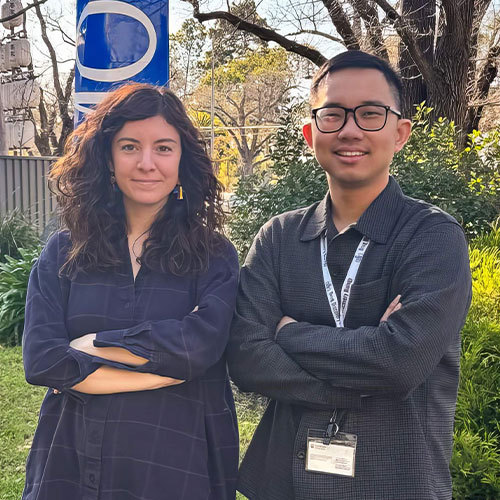
In this project, the aim of Dr Sheng Yu Ang and Dr Rocio de la Fuente Gonzalez was to discover new molecules that will lay the foundation for the development of better GPR17 blockers. They used a chemical library to identify GPR17 blockers that can be developed into therapies to promote regrowth of the myelin in people with MS.
Outcome
The team has successfully identified a new set of molecules that could be developed into therapies to promote myelin repair in MS.
They screened a library of tens of thousands of small molecules to see which could block the activity of GPR17, and identified 40 candidates. These molecules are chemically quite different from each other, providing multiple ways to block GPR17 and expanding opportunities for drug development.
Importantly, none of the molecules have been described before, making them strong candidates for further development and potential patenting for use in MS.
These findings are still at an early stage, and the team has formed a collaboration with the Australian Translational MedChem Facility (ATMCF) at Monash University to optimise these blocker molecules and improve their effectiveness.
The next step will be testing the molecules in laboratory models of MS, bringing this work closer to developing new therapies that can repair myelin and address an important unmet need in MS treatment.
Laboratory research that investigates scientific theories behind the possible causes, disease progression, ways to diagnose and better treat MS.
Lab to clinic timeline
10+ years
Translational
Research
Research that builds on fundamental scientific research to develop new therapies, medical procedures or diagnostics and advances it closer to the clinic.
Lab to clinic timeline
5+ years
Clinical Studies and Clinical Trials
Clinical research is the culmination of fundamental and translational research turning those research discoveries into treatments and interventions for people with MS.