Problems with balance can be a significant issue for some people with multiple sclerosis (MS). Poor balance makes it harder to do everyday activities, such as socialising, working, hobbies, or staying active. It is also closely linked to a high risk of injury from falls.
Many factors can cause balance problems in MS, including changes to the sense of feeling (sensation) in the feet and how the leg muscles work. Most people with MS do not receive treatment for their foot sensation problems and there are few options available.
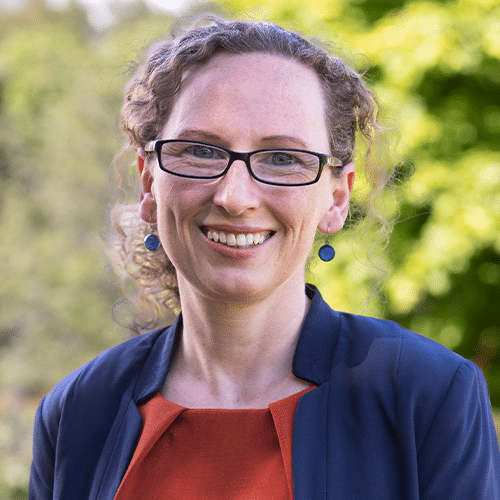
Associate Professor Anna Hatton and her team have partnered with experts in medical technology to design sensory shoe insoles that provide extra sensation to the feet, aiming to improve balance. The team has talked to people with MS in the United Kingdom and Australia - exploring their foot health concerns, balance, and mobility issues - to guide insole development. They listened to feedback from people with MS who took part in the team’s earlier studies and used their ideas to improve the design of the insoles to better meet their needs.
Associate Professor Hatton aims to find out if these sensory insoles can help improve balance compared to standard insoles. She and her team will assess how people with MS perform balance tasks that copy situations where falls are more likely. The team will record nerve and muscle activity in people’s legs after they have worn the insoles for four weeks. They will talk to study participants about their experience wearing the insoles and listen to their recommendations to make sure the insoles are practical and easy to use.
The ultimate goal is to use insole technology to improve balance enough to reduce the risk of falls. The team will work together with people with MS to create a research plan to explore this in a future study.
Multiple sclerosis (MS) is a disease in which the immune system mistakenly attacks the brain and spinal cord, leading to symptoms such as fatigue, vision problems, and difficulties with movement or cognition. Although current treatments can reduce relapses and slow progression, there is no cure, and many individuals eventually develop more severe forms of the disease.
Research has shown that MS is influenced by a large number of genetic differences (also known as variants) that are commonly found in people living with MS but are much rarer in people who do not have MS. Most of these genetic changes do not directly affect genes themselves. Instead, they occur in parts of our DNA that control when and where genes are switched on, particularly in immune cells like B cells. Understanding the consequences of these genetic variants is very challenging, especially because each one might only have a small effect on its own. Even more difficult is the question of how combinations of these variants might interact to cause disease, since experimental tools to study these combined effects have not yet been developed.
In this study, Dr King and his team aim to test how over 100 MS-associated genetic variants affect gene activity and immune cell function. They will also explore how combinations of risk variants influence cell behaviour, using innovative methods designed to overcome longstanding technical barriers. By mapping how MS-associated genetic differences - both individually and in combination - change B cell function, this project will uncover key pathways that contribute to MS. These insights will lay a critical foundation for developing future therapies that target the underlying genetic factors involved in the disease, offering new hope for more effective and personalised treatment strategies.
Multiple sclerosis (MS) is a disease that damages the protective covering of nerve cells in the brain and spinal cord, leading to problems with movement, sensation, and other functions. In MS, blood flow to the brain is reduced, and this may happen even before symptoms appear, possibly due to genetic factors.
This is important because blood carries oxygen and glucose, which nerve cells and oligodendrocytes (the cells that make myelin) need to survive. Blood flow becomes even more critical after myelin is damaged, as the nerves work harder and need more oxygen and glucose to function properly.
This project aims to protect nerve cells and reduce disability by understanding how a person’s genes affect brain blood vessels. To achieve this, they will grow two types of blood vessel cells, called pericytes and endothelial cells, from stem cells stored in the MS Stem Cell Biobank. These stem cells come from the blood of people with and without MS.
In growing these blood vessel cells, the team will explore:
A key goal of this project is to find points on the blood vessels that could be targeted with drugs to improve blood flow to the brain. Professor Young and her team hope to show that even after MS develops, supporting blood vessel health could help repair myelin and protect nerve cells from damage.
Multiple sclerosis (MS) is a disease that affects the brain and spinal cord. It often starts in young adults and can cause problems with movement, thinking, and independence. While there are effective treatments that reduce sudden flare-ups (relapses), these medicines don’t always stop the slow, ongoing inflammation in the brain that continues to cause damage over time. This type of inflammation, called “smouldering inflammation,” is harder to see but plays a major role in long-term disability.
This study will look at how well three commonly used MS treatments - ocrelizumab, fingolimod, and natalizumab - work to reduce smouldering inflammation in real-life clinical settings. To do this, Professor Alexander Klistorner and his team will use a new MRI-based measure called Chronic Lesion Tissue Expansion (CLTE), which tracks how slowly damaged areas in the brain grow over time. CLTE is a sensitive way to measure the hidden damage that continues even when people are not having relapses.
The team will use data from the MSBase Registry and Imaging Repository, which includes brain scans and medical information from thousands of people with MS. By comparing MRI scans before and after someone changes treatment, it will be possible to see whether these therapies slow down the hidden damage in the brain. This method helps us compare treatments more accurately, because each person serves as their own comparison.
The study was designed together with people living with MS, many who have expressed that stopping this hidden, slow progression is their top priority. Results from the study will help shape future research and treatment strategies to better protect people from long-term disability.
A person’s genetics can influence their risk of developing MS. However, few MS genes have been identified, and it is not well understood how genes drive MS development.
Previous research by Dr Nicholas Blackburn and his team into the genetics of MS families (families that have 3 or more close relatives who have MS) has shown that there are genetic changes in MS families that may affect a person’s genes in a way that contributes to MS. These changes are rare in the general population but can occur multiple times in a single family because of shared genetics. These changes might be why some families have many people with MS.
The focus of this current project is to increase the number of MS families studied to establish if similar genetic changes to those already identified occur across other MS families. Dr Blackburn and his team will then use the genetic changes identified in MS families to test whether the same genes are linked to MS in data from thousands of people with MS. Together, this will provide clues as to why MS develops so strongly in some families and lead us to better understand why MS develops overall, including in people who do not have a family history.
In multiple sclerosis (MS), the immune system mistakenly attacks the protective covering of nerve fibres in the brain and spinal cord (myelin), causing lesions (damaged areas).
Researchers have observed that, in addition to the inflammation caused when these lesions form, there is also slow, ongoing inflammation around the edges of older chronic lesions. This gradual inflammation contributes to the growth of lesions over time and is linked to disease progression, such as nerve damage, brain shrinkage, and worsening disability.
The researchers believe that this slow, ongoing inflammation at the edges of chronic lesions could be an early sign of more localised inflammation in the brain. They think that promoting the repair of myelin (remyelination) could reduce this inflammation and stop the lesions from expanding, helping protect the nerves from further damage.
The study aims to test how effective remyelination therapies are in preventing damage caused by this slow, ongoing inflammation. The team will analyse brain imaging data from clinical trials of remyelinating drugs to see if they can slow lesion expansion and prevent nerve damage.
By understanding how these therapies work and finding markers to measure their effectiveness, the researchers hope to develop better treatments for people with MS and improve their long-term outcomes.
We have known for years that exercise is beneficial for people with multiple sclerosis (MS), yet most people with MS do not do enough exercise to experience these benefits.
Associate Professor Yvonne Learmonth and her team have found that people with MS living in the UK, USA, Canada and Australia, would like to go to their doctors and nurses and discuss exercise, receive correct and consistent exercise information and receive tools or referrals to exercise specialists. They also found that doctors and nurses involved in MS care want to promote exercise to their patients, but they lacked the knowledge, strategies, resources and confidence to do this.
Associate Professor Learmonth and her team will interview people with MS, and doctors and nurses involved in MS care to co-design an intervention and toolkit – the “Provider Education in Using Strategies for Exercise promotion in MS” (PULSE-HCP) training programme - for MS healthcare providers to promote exercise to people with MS. The PULSE-HCP training programme will help ensure healthcare providers routinely discuss exercise with people with MS, offering them tailored advice and support. This approach will help people with MS achieve their exercise goals, learn skills to monitor their progress, feel good about mastering exercise and identify strategies to overcome barriers to incorporate exercise into their lives.
The team will design and test their intervention to ensure it can be implemented by doctors and nurses across MS care. At the end of the project, they will assess the ability of doctors and nurses to promote exercise and what impact this has on exercise behaviour in people with MS.
MS is a progressive disease that damages the brain and spinal cord, causing inflammation and loss of protective myelin around nerve cells. While treatments exist to manage early MS, options are very limited for people with progressive MS. Associate Professor Justin Rubio’s research aims to tackle a major hurdle that has slowed the development of therapies that could protect or repair the brain in progressive MS.
Associate Professor Rubio’s team has contributed significantly to understanding MS at the genetic level. Recently, they discovered that brain cells in MS lesions accumulate genetic mutations much faster than normal. This discovery suggests that certain genetic changes in the brain may influence how MS progresses. Their recent genetic study also suggest that how well the brains can adapt to damage, or their resilience, may play an important role in MS progression.
Building on these insights, Associate Professor Rubio and his team will use advanced methods to analyse genetic mutations, gene expression, and regulation in the brain. By combining these data with findings from their previous genetic study, they aim to identify genes and pathways involved in MS that could serve as targets for new treatments. The team will use computational tools to find these potential targets, drawing on public data as well as their expertise in MS research, from laboratory work to clinical application.
This project could pave the way for new therapies that protect brain cells and slow MS progression, offering hope for people with progressive MS.
This project aims to improve treatments for multiple sclerosis (MS), a disease that affects the brain and spinal cord, and is common in young adults. MS causes the immune system, which usually protects the body, to attack the brain and spinal cord instead.
The project focuses on a protein called Mertk, which helps control the immune system's actions in the brain. Professor Trevor Kilpatrick seeks to understand how Mertk affects MS and identify who might benefit most from treatments targeting this protein. Studies will be conducted in both laboratory models of MS and people with MS.
By examining blood samples from people with MS, the team will explore how changes in the levels of Mertk are linked to disease activity. Laboratory models will also investigate how changes in Mertk influence MS symptoms, such as weakness and loss of coordination.
The team previously showed that individuals with a specific version (genetic variation) of the Mertk protein have more active MS measured on brain imaging than those without this variant, in people treated with natalizumab.
In this study, Professor Kilpatrick will determine whether variants of Mertk also influence response to another major MS therapy, ocrelizumab, that targets a different immune process.
If a genetic test of Mertk could help predict response to major MS therapies, this would help clinicians select treatments that are more effective and potentially reduce side effects. The goal is to improve understanding of MS and improve the lives of those living with the condition.
Associate Professor Litza Kiropoulos is leading a new study called the ACTION-MS Online trial, aimed at evaluating a web-based program to support people with MS who experience mild to moderate depression. Depression is a common challenge for individuals with MS, and while treatments are available, accessible MS-specific interventions are limited.
The ACTION-MS Online program has been shaped by valuable insights from people living with MS, their carers, and healthcare professionals, gathered through focus groups to ensure it meets their specific needs and experiences. This innovative, web-based initiative provides a convenient way for individuals to manage mild to moderate depressive symptoms from the comfort of their home.
This trial will examine several important factors: feasibility (how well the program can be delivered online), acceptability (how well it meets participants' needs), satisfaction, and overall effectiveness of ACTION-MS Online in reducing depression. Building on previous successful MS depression trials, Associate Professor Kiropoulos and her team will use established clinical trials infrastructure and recruitment methods that have been developed in earlier studies to enrol participants and gather data.
The goal of the ACTION-MS Online trial is to assess whether this type of intervention could become a standard, widely accessible option in clinical practice. If successful, ACTION-MS Online could be offered as a free resource for people with MS both nationally and globally, providing an effective tool for managing depression and improving quality of life. This trial represents an important step toward making mental health support more accessible for people with MS everywhere.