Extracellular vesicles (EVs) are particles with a lipid (fat) membrane that almost all types of cells release. EVs play an important role in travelling between cells as communicators and carrying a large range of substances that influence the biological functions of the receiving cells. EVs also have an effect on various disease processes.
EVs are hugely important in advancing our understanding of multiple sclerosis (MS) due to their role in communication between cells, their potential as blood biomarkers (biological signs) and because they are able to cross the blood-brain barrier, a layer of cells that protects the brain from harmful substances. In MS, there is a great need to find reliable and biomarkers that require less invasive sampling than lumbar puncture, to support diagnosis and monitoring of therapy.
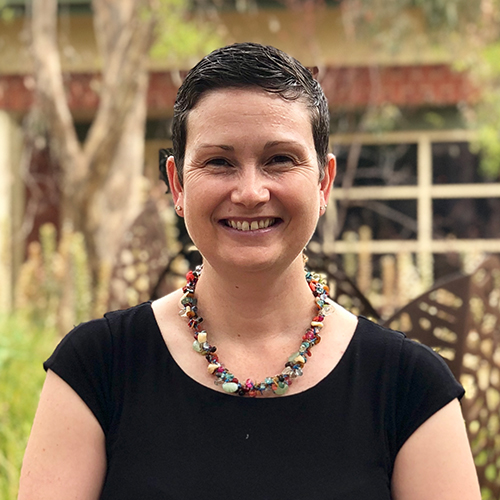
PhD candidate, Ms Drishya Mainali, is travelling to Dr Setty Magaña laboratory at The Ohio State University for eight weeks to learn advanced techniques in isolating, characterising and analysing EVs. She will bring these techniques back to her laboratory at The University of Sydney, NSW and pass them on to her team. The techniques will also be used in ongoing research projects.
These advanced techniques are crucial for accurately profiling EVs in fluid samples from people living with MS. By enhancing her laboratory’s capabilities to profile EVs, Ms Mainali’s work will contribute to the early detection and monitoring of MS.
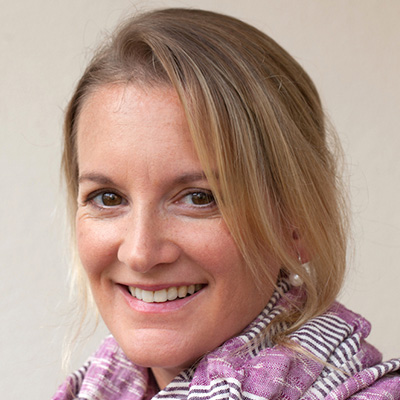
Dr Jo Lane works at the Research School of Population Health, Australian National University (ANU). She is part of large multidisciplinary team called Our Health in Our Hands (OHIOH). This is a very diverse team of scientists and clinicians working closely with people living with MS to tackle barriers to the introduction of personalised medicine and improve the clinical management and overall health and wellbeing of people living with MS.
The Ian Ballard Travel Grant will provide Dr Lane with the opportunity to collaborate with two exemplary academics at the forefront of MS research in the US and Canada. She will be travelling to the Johns Hopkins Multiple Sclerosis Centre USA and the University of British Columbia Canada for a period of nearly 3 weeks.
At the Johns Hopkins Multiple Sclerosis Centre, she will be collaborating on environmental risk factors and MS, and their use of apps and other technologies to monitor MS disease activity and progression to inform, complement and optimise similar projects within OHIOH. From there, she will be going to the University of British Columbia to collaborate on a manuscript. While she is in North America, she will also be presenting her work at the prestigious Americas Committee for Treatment and Research in Multiple Sclerosis (ACTRIMS) Forum.
The travel award will allow Dr Lane to develop complementary and novel collaborations to improve the detection of MS disease and/or progression and optimise personalised medicine in MS.
Updated 22 January 2020
Magnetic Resonance Imaging (MRI) plays a crucial role in the diagnosis and treatment of MS. Being the only way to locate and identify MS lesions in the brain, and for monitoring long term disease activity and progression, MRI is a truly powerful technique. However, its potential may not be fully realised, and further research and development is necessary to improve disease monitoring.
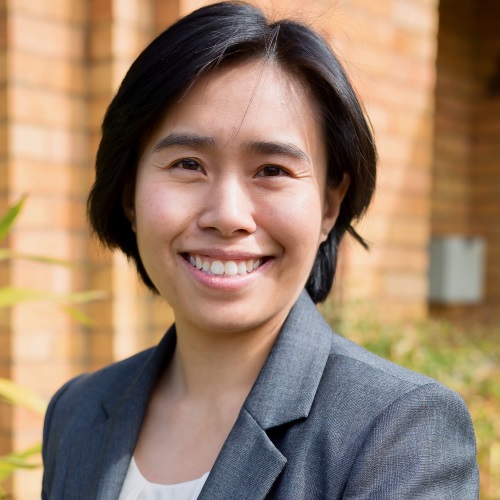
The Clinical Outcomes Research (CORe) Unit at the University of Melbourne has established a number of strategic partnerships with Universities globally. This travel grant will enable CORe to establish a student exchange program with the University of Genoa, where there is strong expertise in MS clinical trials, focusing on MRIs.
Dr Ai-Lan Nguyen will travel to Genoa to study the differences in the ways that radiologists take images with MRI machines so that she can then develop a uniform way to analyse MRIs in MS regardless of where they were taken. It is expected that two PhD projects will then arise out of this study.
This collaboration will help improve the use of imaging in clinical trials and to inform patient decision making and improve clinical care for MS. It will also provide Dr Nguyen with additional skills to mentor future medical doctors and researchers under her supervision.
Updated: 23 January 2019
The link between diet and the risk of MS remains relatively poorly understood. Dr Lucinda Black and her international collaborators have been collecting dietary intake information for the past two years, with the aim of studying associations between diet and risk of MS.
They are pooling information from two different studies linking environmental factors to MS, the long established AusImmune study and the American MS Sunshine Study, with the hope that pooling data will lead to more robust results and new insights into the dietary risks associated with MS.
This award will allow for the scientists from both studies to continue collaborating and to support Dr Black visiting the Kaiser Permanente Institute (USA) for a period of two weeks in order to review the food records, establish a protocol for data analysis, and conduct preliminary analyses. This is a challenging project as dietary information by its very nature is large and complex, but by working closely together with other experts in this area, Dr Black will be able to maximise collaborative potential.
The results from this project will not only substantially improve our understanding of diet and risk of MS, but also provide evidence for the development of clinical trials in diet and early disease progression. It will further help develop evidence-based dietary recommendations for people at high risk of MS and/or at early stages of the disease.
Updated: 23 January 2019
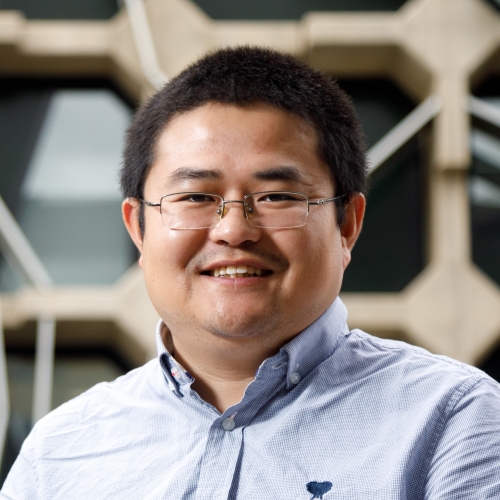
There are well-recognised differences between males and females when it comes to MS. Approximately three quarters of those diagnosed with relapsing-remitting MS in Australia are female. However, males are on average older at diagnosis and are more likely to develop progressive disease than females, suggesting a potential role of the sex chromosomes in MS. Some of the genes found on the female sex chromosome, the X chromosome, have shown some association with MS, but there is very little known about the genes on the Y chromosome, and whether they play any role in MS.
The International Multiple Sclerosis Genetics Consortium (IMSGC) has carried out large genetic studies which have been successful in identifying genetic risk factors for MS, with 200 MS related genetic variants being identified so far. The IMSGC studies have involved the largest amount of MS genetic data to date. Through this Travel Award Dr Yuan Zhou will be able to work closely with the leading members of the IMSGC to develop a pipeline specially designed for sex chromosome analysis. This work will provide insights into the differences in the risk of MS between males and females. This collaboration will enable a new understanding of MS onset and progression, which has the potential to lead to innovative ways to intervene in the disease process and improve our understanding of MS.
Updated: 23 January 2019
Dr Kimberley Pitman has been awarded a highly prestigious NHMRC Early Career Fellowship. Part of her fellowship involves developing a method to grow human myelin producing cells in the laboratory. This is known as tissue culture. Myelin, the coating that protects the nerve cells in the brain and spinal cord, is produced by cells called oligodendrocytes. It allows electrical signals, such as those that signal moving your arm, to be conducted along the nerve cells quickly. In MS, there is a loss of oligodendrocytes which ‘short-circuits’ the nerve signals leading to the symptoms of MS.
With the help of this Ian Ballard Travel Award, Dr Pitman will travel to Münster, Germany, to learn from Professor Tanja Kuhlmann at Universität Münster. During her six week stay here, Dr Pitman will learn and adapt methods to grow and develop human oligodendrocytes in the laboratory. Once back in Australia, this will allow Dr Pitman to greatly advance her research into finding ways to repair myelin in MS. The gradual loss of myelin over time is associated with progressive MS and this research will open the door to further studies investigating myelin repair and progressive MS. This laboratory model could be used to test new therapies that may help prevent, treat or cure progressive MS.
Learning these techniques will also position Dr Pitman as a leader of this technique here in Australia, and as a key member of one of the few laboratories that can perform this technique worldwide. This will lead to productive collaborations with other national and international researchers.
With the help of the Ian Ballard Travel Award, Dr Todd Hardy, a neurologist from the Brain and Mind Centre in Sydney, will be travelling to the USA to study Balo’s disease.
Balo’s disease is considered by many neurologists to be a rare variant of MS. In this disease, the immune system damages myelin in the central nervous system, as it does in MS. However, unlike in MS, in Balo’s disease the myelin is lost in distinct circles, which alternate with circles of undamaged tissue, creating an image on an MRI much like a target.
Dr Hardy will collaborate with Dr Oliver Tobin from the world-renowned medical and research centre, the Mayo Clinic, in Minnesota, USA, for two weeks in June. During this time he will work with Dr Tobin to gather data on cases of Balo’s disease using the world’s largest cohort of Balo patients based at the Mayo clinic. He aims to develop a better picture of the characteristics of this disease in comparison with typical MS.
He will collect clinical information such as age, sex, symptoms, number of attacks, and data on the pathology observed in the brains of people with this condition. The pathological data will include MRI scans, lumbar puncture results, and PET images.
Dr Hardy will then compare this information with data from people with MS whose data is contained within the same database at the Mayo Clinic. He is particularly interested in the age attacks began, the attack severity, and the long term disability outcomes for people with Balo’s disease compared to MS. He will also determine what proportion of people with Balo’s disease go on to develop more typical MS.
Dr Michael Lovelace and his team have been working for two decades on the role of the kynurenine pathway in MS. This biological pathway breaks down the amino acid tryptophan in the body and produces toxic metabolites that correlate with increased disability in the blood and fluid which surrounds the brain and spinal cord of people with MS. The research team has shown that the products of the kynurenine pathway can also affect development of natural stem cells in the brain. This opens up an entirely new field for the kynurenine pathway in MS, through its ability to modulate repair via stem cells.
Previous work undertaken by this group have also shown that the toxic metabolites can be neutralised using other ‘inhibitor’ molecules when applied to cells grown in the laboratory. This work is now at an exciting stage where testing needs to be carried out on cells taken from human brain tissue. This award will allow Dr Lovelace to visit the laboratory of Professor Jack Antel at McGill University in Canada to receive training in a technique where the human cells that produce myelin in the brain are isolated from tissue taken during neurosurgery. The cells obtained using this technique will allow Dr Lovelace to determine whether inhibitors of the kynurenine pathway are effective in these cells and whether it is possible to use these inhibitors to enhance the brain’s capacity to repair myelin lost in MS.
Updated: 1 February 2017
The Ian Ballard Travel Awards are designed to allow Australian researchers to travel overseas to extend their skills and collaborate with leaders in the field of MS research. Dr Black has received an Ian Ballard Travel Award to support her work investigating the vitamin D pathway in MS. Vitamin D is found in our diets and is formed in the skin upon exposure to sunlight. Studies have shown that Vitamin D is related to the risk of developing MS. However it is not clear which components of the vitamin D pathway are involved, or whether the effect is related to sun exposure or dietary vitamin D supplementation, and whether these are also influenced by skin tone or ethnicity. With this grant, Dr Black will travel to the laboratories of Dr Annette Langer-Gould at Kaiser Permanente in California, USA, to analyse vitamin D in samples from the US-based MS Sunshine Study and the Australian AusImmune study.
The Ian Ballard Travel Awards are designed to allow Australian researchers to travel overseas to extend their skills and collaborate with leaders in the field of MS research.
Only during the last two decades have clinicians become increasingly aware of the prevalence and profound functional impact of cognitive impairment in MS. Dr Hannah Gullo, will spend four weeks at the Kessler Foundation in New Jersey in the USA, working with Professor John De Luca and his colleagues. Professor De Luca is the Senior Vice President for Research at Kessler Foundation and oversees the Kessler Foundation's renowned rehabilitation research in multiple sclerosis as well as spinal cord injury, brain injury, and stroke. He is internationally renowned for his work in memory and information processing.
Dr Gullo is conducting a randomised controlled trial to assess the use of compensatory memory techniques using Smartwatch technology, and this trip will enable her to consult with international experts in the field of cognitive training in MS and other disorders, to help obtain better outcomes for this trial. This collaboration will also see Dr Gullo combine expertise with researchers from the Kessler Foundation in order to develop a novel technique for training memory and thinking skills in people with MS using both remediation and compensatory rehabilitation techniques.