
Each year, MS Australia holds two grant rounds to select only the top MS research projects to fund. Further information about the comprehensive grant review process is available here.
The 16 new projects announced in 2026 address MS Australia’s priorities for MS research, including causes and prevention, better treatments and cures via repair and regeneration of cells. The projects are driving groundbreaking research in key areas, from using cutting-edge technologies to identifying biomarkers for earlier MS detection, developing innovative treatments for motor symptoms, promoting myelin repair, and exploring lifestyle impacts.

Multiple sclerosis (MS) is a disease that affects the myelin in the brain. Myelin is the fatty layer around neurons (nerve cells) that act like insulation on electrical wire and helps neurons send messages through the brain effectively.
Building and maintaining myelin requires lots of energy, and that makes it vulnerable to damage from inflammation and free radicals (unstable molecules that can affect healthy cells).
Copper is an essential metal that helps cells produce energy and antioxidants, which helps to maintain myelin health and protect cells from damage. When copper cannot properly enter the brain, myelin becomes damaged, suggesting it may play an important role in MS.
While the cause of MS isn’t known just yet, it is believed to involve both genetic and environmental risk factors. Among the greatest risk factors for MS is prior infection with Epstein-Barr virus (EBV). Another risk factor is vitamin D deficiency. Additionally, patients with MS are likely to have fewer ‘good bacteria’ in their gut, and more ‘bad bacteria’. This research project will test the hypothesis that these three environmental factors have something in common – they interact with copper.
There is new evidence that copper absorption depends on a healthy assortment of gut bacteria, and vitamin D helps incorporate copper into cellular antioxidants. Additionally, new evidence suggests that if copper is disrupted, myelin may ‘look like’ Epstein-Barr virus to the immune system resulting in the immune system attacking the myelin. Historically, this has been difficult to study, but due to new technical advances it is now possible to take images of copper in the brain.
Dr Lins and her team aim to determine if copper is at the core of MS environmental risk factors, with hopes this will lead to new treatment and prevention strategies.
Multiple sclerosis (MS) is a disease in which the immune system mistakenly attacks the brain and spinal cord, leading to symptoms such as fatigue, vision problems, and difficulties with movement or cognition. Although current treatments can reduce relapses and slow progression, there is no cure, and many individuals eventually develop more severe forms of the disease.
Research has shown that MS is influenced by a large number of genetic differences (also known as variants) that are commonly found in people living with MS but are much rarer in people who do not have MS. Most of these genetic changes do not directly affect genes themselves. Instead, they occur in parts of our DNA that control when and where genes are switched on, particularly in immune cells like B cells. Understanding the consequences of these genetic variants is very challenging, especially because each one might only have a small effect on its own. Even more difficult is the question of how combinations of these variants might interact to cause disease, since experimental tools to study these combined effects have not yet been developed.
In this study, Dr King and his team aim to test how over 100 MS-associated genetic variants affect gene activity and immune cell function. They will also explore how combinations of risk variants influence cell behaviour, using innovative methods designed to overcome longstanding technical barriers. By mapping how MS-associated genetic differences - both individually and in combination - change B cell function, this project will uncover key pathways that contribute to MS. These insights will lay a critical foundation for developing future therapies that target the underlying genetic factors involved in the disease, offering new hope for more effective and personalised treatment strategies.
Multiple sclerosis (MS) is a disease that damages the protective covering of nerve cells in the brain and spinal cord, leading to problems with movement, sensation, and other functions. In MS, blood flow to the brain is reduced, and this may happen even before symptoms appear, possibly due to genetic factors.
This is important because blood carries oxygen and glucose, which nerve cells and oligodendrocytes (the cells that make myelin) need to survive. Blood flow becomes even more critical after myelin is damaged, as the nerves work harder and need more oxygen and glucose to function properly.
This project aims to protect nerve cells and reduce disability by understanding how a person’s genes affect brain blood vessels. To achieve this, they will grow two types of blood vessel cells, called pericytes and endothelial cells, from stem cells stored in the MS Stem Cell Biobank. These stem cells come from the blood of people with and without MS.
In growing these blood vessel cells, the team will explore:
A key goal of this project is to find points on the blood vessels that could be targeted with drugs to improve blood flow to the brain. Professor Young and her team hope to show that even after MS develops, supporting blood vessel health could help repair myelin and protect nerve cells from damage.
Multiple sclerosis (MS) is an inflammatory condition of the central nervous system (CNS) that develops due to both genetic and environmental factors. Amongst the known environmental risk factors is infection with the Epstein-Barr virus (EBV) and other herpesviruses. EBV is a common herpesvirus that affects up to 90% of people worldwide and is the virus that causes infectious mononucleosis (glandular fever).
EBV has been strongly linked to the development of MS and is thought to play a role in how the disease progresses over time. However, even though these connections are known, the biological mechanisms behind this link are not fully understood.
To better understand this link, the project will use data from three large Australian studies: the Ausimmune Study, Ausimmune Longitudinal Study, and PrevANZ trial. This includes blood tests of genetics; which genes are switched on and off in the blood cells; and immune responses - to both herpesviruses and brain proteins (autoimmune responses).
This project aims to examine:
Mr Eisner and his research team aim to better understand the impact of EBV on MS onset and progression, with the goal of helping to tailor treatments to each individual person to slow the disease progression.
Problems with balance can be a significant issue for some people with multiple sclerosis (MS). Poor balance makes it harder to do everyday activities, such as socialising, working, hobbies, or staying active. It is also closely linked to a high risk of injury from falls.
Many factors can cause balance problems in MS, including changes to the sense of feeling (sensation) in the feet and how the leg muscles work. Most people with MS do not receive treatment for their foot sensation problems and there are few options available.
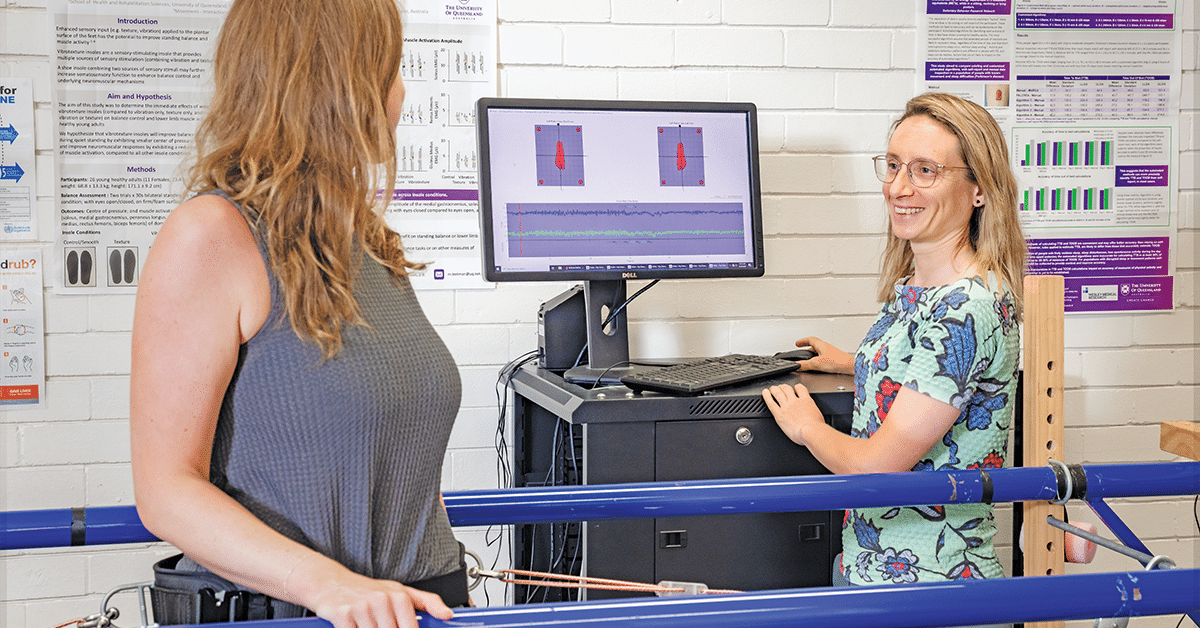
Associate Professor Anna Hatton and her team have partnered with experts in medical technology to design sensory shoe insoles that provide extra sensation to the feet, aiming to improve balance. The team has talked to people with MS in the United Kingdom and Australia - exploring their foot health concerns, balance, and mobility issues - to guide insole development. They listened to feedback from people with MS who took part in the team’s earlier studies and used their ideas to improve the design of the insoles to better meet their needs.
Associate Professor Hatton aims to find out if these sensory insoles can help improve balance compared to standard insoles. She and her team will assess how people with MS perform balance tasks that copy situations where falls are more likely. The team will record nerve and muscle activity in people’s legs after they have worn the insoles for four weeks. They will talk to study participants about their experience wearing the insoles and listen to their recommendations to make sure the insoles are practical and easy to use.
The ultimate goal is to use insole technology to improve balance enough to reduce the risk of falls. The team will work together with people with MS to create a research plan to explore this in a future study.
In multiple sclerosis (MS), the immune system mistakenly attacks myelin, a protective coating around nerves in the brain and spinal cord. Myelin helps these nerves send signals quickly and efficiently.
When myelin is damaged, nerve signals are disrupted. This can lead to a range of symptoms, including trouble walking, bladder issues, fatigue, and difficulties with thinking or memory.
In the early stages of MS, some natural myelin repair can occur. But over time, this process fails, leading to permanent nerve damage and progressive disability, even when inflammation is well controlled. There is an urgent need to develop treatments that enhance myelin repair in people living with MS – identified as a top research priority in MS Australia’s Research and Advocacy Priorities Survey.
Ms Bethany Nicol’s research aims to uncover how myelin is made in the brain, and how this process can be switched back on after damage. She will study a molecule called Akt, which is known to help myelin-forming cells grow and function.
Using models, she can watch these cells live under a microscope and see when and where Akt is active. She will also test how activating Akt at different stages of cell development affects myelin growth and identify the key molecules it controls.
The goal of this research is to find new, specific targets for future drug development. This knowledge could support the development of therapies that help the brain repair itself and improve outcomes for people with MS.
Multiple sclerosis is a long-term condition where the immune system mistakenly attacks the brain and spinal cord. While we don’t yet know exactly what causes it, both genetics and environmental factors, including gut health, are thought to play a role.
Recent research has found that people with MS often have an imbalance in their gut bacteria. This imbalance may lower the levels of short-chain fatty acids (SCFAs), which are helpful molecules produced when gut bacteria digest dietary fibre. SCFAs like acetate, propionate, and butyrate are known to help calm the immune system and reduce inflammation.
This project will explore how SCFAs affect immune cells in people with MS. Dr Parkin and her team will collect blood samples from people with and without MS. Immune cells from these blood samples will be exposed to SCFAs to see how they respond. This will help to understand whether SCFAs can shift immune cells toward a more balanced, less inflammatory state.
By studying how SCFAs influence immune cells, this research could point to new supportive strategies, such as safe, fibre-based dietary supplements, to help manage immune activity and improve outcomes for people living with MS.
Upper limb weakness and fatigue are among the most common and disabling symptoms of multiple sclerosis (MS) affecting around 75% of people living with the disease. Weakness and fatigue of the arm and hand significantly impacts independence, the ability to complete daily tasks, and overall quality of life. While current treatments aim to slow disease progression, they offer little help in restoring lost strength or movement.
Dr Thorstensen’s project will test a new, non-invasive technique called paired corticospinal-motoneuronal stimulation (PCMS), designed to strengthen the communication between the brain and spinal cord. PCMS uses carefully timed electrical signals and magnetic brain stimulation to increase the responsiveness of the nerve cells in the spinal cord that control muscles (motoneurons). In previous research on spinal cord injury, PCMS has been shown to boost muscle strength by up to 50%. This study is the first to apply PCMS to people with MS.
Dr Thorstensen’s team will study this technique in individuals with mild-to-moderate MS to see whether it will increase the responsiveness of motoneurons and whether changes correlate with improved symptoms in regard to weakness and fatigue. By comparing real and mock stimulation, the team will generate early evidence that will lead to new rehabilitation tools for MS.
Ultimately, the goal is to develop PCMS into a low-cost, widely available therapy that improves motor function, reduces disability, and enhances quality of life for people living with MS.
People living with multiple sclerosis (MS) often experience worsening symptoms and reduced treatment effectiveness when also living with overweight or obesity. Healthy lifestyle changes, including exercising more or healthy eating, can improve MS outcomes, but not everyone responds the same way. One possible reason for this difference is the microbiome, which is the community of bacteria that live in and on our bodies. While gut bacteria have received a lot of attention, the mouth also hosts a large and important microbiome that could impact health, especially in people living with MS.
Recent research shows that the oral (mouth) microbiome may play a role in inflammation and neurological diseases, but very little is known about how it behaves in people living with MS or how it changes with lifestyle improvements. Dr Olivia Wills and her team will investigate how a weight loss program focused on diet, exercise, and behaviour change therapy, affects the oral microbiome in people living with relapsing remitting MS over a 6-month period.
By analysing saliva samples collected from the mouth at the start of the weight loss program and six months later, Dr Wills aims to understand whether helpful bacteria increase and harmful bacteria decrease. She and her team will also investigate whether fatigue and mood improve. This study builds on an existing clinical trial and will help Dr Wills and her team learn if improving the oral microbiome is part of the benefit of lifestyle changes for people living with MS. This could contribute to more personalised, microbiome-targeted care in the future.
Associate Professor Justin Rubio and his team recently published research showing that DNA from nerve cells located in multiple sclerosis (MS) brain lesions mutates at an accelerated rate compared to other nerve cells. As strong inflammation occurs in MS brain lesions, it is thought that this inflammation is somehow involved in causing mutations to nerve cell DNA, which is likely to affect the function of nerve cells and their viability.
An important unanswered question is whether inflammation is the cause of the increased mutation rate in nerve cells, or whether the nerve cells have a higher mutation rate that then triggers inflammation and the damage associated with it.
To determine whether inflammation is the cause or an effect of the accelerated mutation rate in nerve cells, this project will investigate mutation rates in DNA from cells in lesion biopsy samples from people at an early stage of their MS course. The team will then compare the mutation rate of cells from these early-stage MS lesion biopsy samples with those from post-mortem MS lesions from people who had late-stage (progressive) MS. This comparison will reveal differences in mutation patterns between early- and late-stage MS lesions, including any genes impacted more than others, and will help determine if the accelerated mutation rate is already present in cells from early-MS lesions.
Outcomes from this project will transform our understanding of the relationship between inflammation in the brain, changes in DNA that builds up in individual brain cells, and MS progression.
Multiple sclerosis (MS) is a chronic autoimmune disease that affects the central nervous system. It is driven by an overactive immune response, where T cells (a type of immune cell) mistakenly attack myelin, the protective covering of nerve fibres, leading to inflammation and nerve damage. While genetic factors play a role in MS, environmental influences are increasingly recognised as important contributors to MS development and progression.
The effects of diet on MS risk and progression are complex and consistent evidence is lacking. However, recent research suggests that specific dietary changes may have potential to impact MS. Dr Tan’s previous studies found a link between high meat consumption and greater pro-inflammatory T cell activity in people with MS. Since meat is rich in branched-chain amino acids (BCAAs)—including leucine, isoleucine, and valine—Dr Tan and his team studied their role in immune regulation.
In laboratory models, the team discovered that a diet high in BCAAs increased T cell activity even at resting state. This was linked to stronger responses of the T cells when they reacted to specific molecules. Further laboratory experiments found that adding BCAAs amplifies the inflammatory T cell responses against myelin.
Given the important role of T cells in MS, Dr Tan predicts that increasing BCAA in the diet may worsen disease symptoms in a laboratory model of MS. To explore this, they will study (1) how varying the level of BCAAs in diets impact disease severity and (2) the specific effects of individual BCAAs—leucine, isoleucine, and valine—on disease progression.
These findings could provide valuable insights into dietary influences in MS and may pave the way for dietary strategies to help manage the disease.
A key driver of progression is neurodegeneration, the damage and loss of nerve cells. This close link between neurodegeneration and disease progression underscores its importance as a treatment target. Despite available treatments for multiple sclerosis (MS), protecting the nerves, or “neuroprotection”, remains a significant unmet need, particularly for those living with progressive MS.
In this project, Dr James Hilton and his team are studying a group of compounds called bis-thiosemicarbazones (BTSCs) for their ability to protect the nerves. These compounds have already shown promise in several neurological diseases, including motor neurone disease and Parkinson’s disease, especially through a compound called copper-atsm, or Cu(atsm). They have also shown that Cu(atsm) improves outcomes in models of MS by boosting growth of the protective myelin coating around nerves, reducing lesion size, and supporting nerve repair. It also corrected several copper‑related problems seen in progressive MS.
There is additional evidence that Cu(atsm) may protect nerves by stopping a type of cell death called ferroptosis, driven by iron. Since ferroptosis may play a role in MS, this could be another useful pathway for treatment. Although Cu(atsm) seems to act on both copper imbalance and ferroptosis, it is still unknown how much each of these actions contributes to neuroprotection.
To explore this, Dr Hilton will develop and test new BTSC compounds in cell culture. These compounds will be selected based on their ability to target copper imbalance, ferroptosis, or both. The most promising compounds from each group will then be tested in a model of MS to assess their therapeutic benefit and confirm they act on the intended biological pathways while providing neuroprotection. By understanding how these mechanisms contribute to MS, Dr Hilton and his team aim to discover new and more effective BTSC compounds that could eventually move into clinical testing.
The number of people with overweight/obesity is increasing worldwide. This is accompanied by an increasing number of people with obesity-related chronic disease, including multiple sclerosis (MS). Overweight/obesity is associated with increased MS risk, disease activity, progression, and associated symptoms, and poorer treatment response to disease modifying therapies.
Diet is a risk factor for obesity, and potentially for MS, that people are empowered to change. Macronutrients are the carbohydrates, fats and proteins in food. Changing the macronutrient composition of a diet, particularly carbohydrate and fat, is at the core of the diets promoted for weight loss/management and for people with MS. Previous studies have investigated links between dietary macronutrient composition and MS risk and progression, with varied methods and findings. Most studies have focused on single macronutrients or a handful of dietary patterns where macronutrient composition is manipulated. But they have not considered the effects of all macronutrients together, which is a possible reason for the inconsistent conclusions of those studies.
The Geometric Framework for Nutrition (GFN) is a way of analysing diet that considers the effect of all the macronutrients together, including how they affect each other.
For example, it has shown that weight loss with low carbohydrate diets is partly due to reduced overall energy intake - not because of the reduced amount of carbohydrate per se, but because of increased protein proportion in the diet.
In this project, Dr Hajar Mazahery will apply the GFN to investigate the relationships between macronutrient intake, quality of macronutrients, total energy intake, overweight/obesity, and MS risk and progression. She and her team will use studies from four countries (Australia, United Kingdom, Brazil and Japan), representing individuals with various ethnic backgrounds. The project will produce high quality evidence to support the development of guidance on macronutrients for people with MS. The impact will be substantial, empowering people to make positive changes to their diet.
Multiple sclerosis (MS) is a disease that affects the brain and spinal cord. It often starts in young adults and can cause problems with movement, thinking, and independence. While there are effective treatments that reduce sudden flare-ups (relapses), these medicines don’t always stop the slow, ongoing inflammation in the brain that continues to cause damage over time. This type of inflammation, called “smouldering inflammation,” is harder to see but plays a major role in long-term disability.
This study will look at how well three commonly used MS treatments - ocrelizumab, fingolimod, and natalizumab - work to reduce smouldering inflammation in real-life clinical settings. To do this, Professor Alexander Klistorner and his team will use a new MRI-based measure called Chronic Lesion Tissue Expansion (CLTE), which tracks how slowly damaged areas in the brain grow over time. CLTE is a sensitive way to measure the hidden damage that continues even when people are not having relapses.
The team will use data from the MSBase Registry and Imaging Repository, which includes brain scans and medical information from thousands of people with MS. By comparing MRI scans before and after someone changes treatment, it will be possible to see whether these therapies slow down the hidden damage in the brain. This method helps us compare treatments more accurately, because each person serves as their own comparison.
The study was designed together with people living with MS, many who have expressed that stopping this hidden, slow progression is their top priority. Results from the study will help shape future research and treatment strategies to better protect people from long-term disability.
Multiple sclerosis (MS) is a condition that affects the brain and spinal cord. As people with MS live longer, it is important to understand how ageing affects the course of the disease. Women with MS face particular challenges during midlife and menopause, but this has not been well studied.
Dr Jessica Redmond will explore how ageing and menopause affect symptoms, thinking and memory, and quality of life in people with MS. She and her team will use two studies to investigate this:
Dr Redmond hopes to find patterns that show who is more likely to have worsening symptoms over time. This could help doctors better support women with MS during key stages of life, such as menopause. These patterns may also point to new ways of predicting and managing disease progression. The overall goal is to improve care and outcomes for people with MS as they get older.
People with MS have helped design this research, making sure it focuses on real-world concerns such as fatigue, memory problems, and everyday function.
Effective treatment for progression of disability in multiple sclerosis (MS) remains an urgent unmet need. Developing an effective approach to treating progression is complex, as people with MS respond differently to different therapies. Also, progression in early MS is subtle yet contributes to long-term disability. Progression may be driven by inflammation and nerve degeneration, which are different disease mechanisms that may require different treatment methods.
To treat progression, it is essential to have accurate markers for it. However conventional measures of disease activity, such as relapses, disability and brain imaging, may not detect subtle progression and they do not identify the underlying drivers of progression.
Neurofilament light chain (NfL) and glial fibrillary acidic protein (GFAP) are components of damaged nerve fibres and supporting brain cells, respectively. They are sometimes seen at higher levels in the blood in people with neurological diseases. They reflect nerve degeneration and brain inflammation, respectively, and hold promise for monitoring disease and guiding treatment.
In this project, Dr Winston Dzau will be investigating whether:
Dr Dzau and his team expect this project will help support personalised treatment decisions, using these blood markers that can identify subtle signs of disease progression. The project will help refine the classification of MS based on individual drivers of progression. This will be an important step towards effectively treating the underlying mechanisms of disease progression.