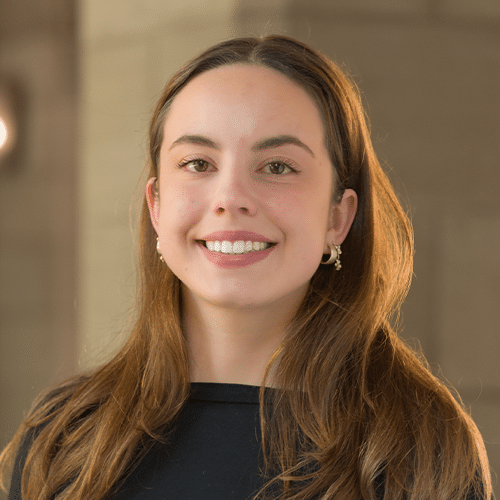
Bethany Nicol

The University of Melbourne, VIC

Bethany Nicol is a researcher at The University of Melbourne. Her project aims to reveal new cell-specific targets to guide the development of therapies that promote myelin repair in MS and focuses on a molecule called Akt. Ms Nicol enjoys the thrill of discovery and the challenge of solving complex problems. Her love for science was inspired by a trip to the Great Barrier Reef as a biology student.

About Bethany Nicol

Tell us about your current research project
My current research aims to advance our understanding of myelin, the protective sheath that insulates nerve fibres in the brain and spinal cord. The focus of this work is on a molecule called Akt, which supports the function of specialised myelin-forming cells (oligodendrocytes).

I am investigating the precise stages of oligodendrocyte development during which Akt activation promotes myelin growth. A further part of my research involves identifying the molecules downstream of Akt that mediate its pro-myelinating effects. To achieve this, I use zebrafish, whose transparent embryos allow live imaging of fluorescently labelled oligodendrocytes in the developing central nervous system (CNS). Together, these studies aim to reveal new, cell-specific targets to guide the development of therapies that promote myelin repair in multiple sclerosis (MS).
Why is your research important and how will it influence the understanding and treatment of MS?
In MS, the immune system mistakenly attacks and destroys myelin in the central nervous system (CNS), slowing neural communication and leaving the underlying fibres vulnerable to damage. With ongoing myelin loss, these unprotected nerves begin to degenerate, leading to the progressive and irreversible disability seen in advanced MS, even when inflammation is controlled. There is an urgent and unmet need for treatments that actively promote myelin repair.

My research takes an innovative approach to this challenge by pinpointing the precise stages of oligodendrocyte development, as well as the downstream molecules that can be targeted and manipulated to enhance myelin production in MS. Ultimately, the outcomes of this project will be crucial in paving the way for targeted remyelination therapies, with the potential to transform MS treatment by complementing immune-modulating approaches with effective brain repair.

What inspired you to get involved in MS research?
I’ve had a passion for understanding neurodegenerative diseases such as MS since my late teenage years, shaped by seeing their impact firsthand and strengthened during my undergraduate studies in Neuroscience. Since being formally introduced to MS research by my current supervisor, Associate Professor Simon Murray, I’ve been privileged to explore this disease on a much deeper and more personal level.

Through my work, I’ve met many people affected by MS, either directly or through loved ones. Some of these people have become incredibly important to me, and their strength in the face of adversity has been truly inspiring. They motivate my commitment to advancing research that could one day change their lives, and the lives of others, for the better.
What do you think has been the most exciting development in MS research?
One of the most exciting developments in MS research has to be the emergence of remyelinating therapies like Clemastine fumarate and PIPE-307. For the first time, we’re seeing treatments that aim to actually repair damaged myelin instead of just focusing on immune modulation. It’s amazing to see basic science finally translating into real clinical progress, showing that those long-standing unmet needs in MS treatment can genuinely be achieved.
What do you enjoy most about your research, and what are some of the challenges you face?
What I enjoy most about my research is the thrill of discovery and the challenge of solving complex problems. I love that each finding helps answer questions that were once unknown, adding a small piece to an ever-evolving body of knowledge. There’s something deeply inspiring about knowing that what we uncover today could shape understanding for future generations. It gives me a strong sense of purpose and responsibility, knowing my work may contribute to something lasting and meaningful.

One of the main challenges I face is managing the time constraints that come with research. There are only so many hours in a day, and it can be difficult to find a healthy balance between the demands of lab work and my personal life. It’s an ongoing challenge, but one that continues to teach me the importance of setting boundaries and practising self-discipline.
Tell us an interesting fact about yourself
Up until I was 16, I wanted to be an architect! Visual Communication and Design was my favourite subject, and I spent most of my free time drawing and designing houses. I also planned to drop all my science subjects the moment I was allowed to… but my high school ran an infamous trip to the Great Barrier Reef, only for students in Year 10 taking VCE 1/2 Biology. I reluctantly signed up just to go on the trip, and from there everything just clicked. That small decision completely changed my life… and now here I am!
Read More

Newsletter subscription

  • This field is for validation purposes and should be left unchanged.

Bethany Nicol