Dr Hajar Mazahery

Deakin University, VIC

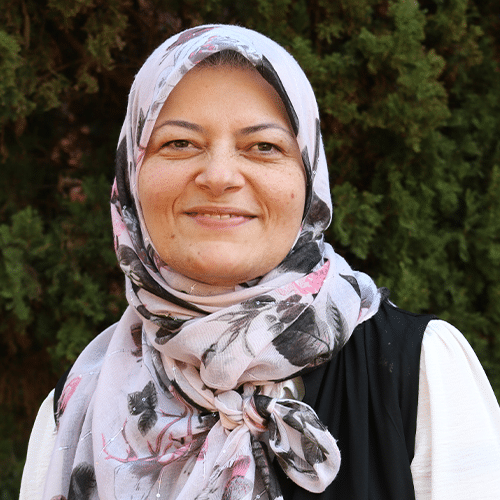
Dr Hajar Mazahery is a Research Fellow at Deakin University. Her project aims to develop guidance for macronutrient composition of diet for people living with MS. Dr Mazahery feels that more research to understand how diet can impact MS will help people make informed decisions about their diets. She enjoys the dynamic nature of research and working with fellow researchers and scientists.

About Dr Hajar Mazahery

Tell us about your current research project
My current project aims to understand interrelated associations between macronutrient intake, quality of macronutrients, energy intake, overweight/obesity and MS risk/progression using national and international datasets. The proposed project will generate high quality evidence to support the development of guidance regarding macronutrient composition of diet for people with MS.

Why is your research important and how will it influence the understanding and treatment of MS?
Associations between macronutrient intake and MS (limited evidence) have been investigated using conventional approaches focusing on single macronutrient intake or a handful of dietary attributes/patterns, without considering the main and interactive effects of macronutrients - a possible reason for mixed conclusions and messages. The geometric framework for nutrition (GFN) is a state-space approach to nutrition that deals with dietary complexity by considering multiple dimensions of macronutrient intake simultaneously. GFN has been successfully applied to investigate associations between macronutrients and various health and disease outcomes in mice and humans, but no studies have been conducted in relation to MS onset and disease course. Using GFN, this project will investigate the interrelated associations between macronutrient intake, quality of macronutrients, energy intake, overweight/obesity and MS onset and disease course. Therefore, my research will generate high quality evidence to support the development of guidance regarding macronutrient composition of diet for people with MS.
What inspired you to get involved in MS research?
I have always been working in the nutrition field but started my nutrition–MS journey when I joined Prof. Lucinda Black’s team. When I started reading more about nutrition and MS, I realised that there is a significant gap in our understanding of role of nutrition in MS. I also found that several diets have promoted specifically to people with MS with conflicting messages; while some restrict carbohydrate and encourage fat intake, others encourage the opposite.

Manipulation of macronutrient composition, particularly carbohydrate and fat, is at the core of these diets, despite a lack of scientific evidence. This inspired me to better understand the role of micronutrition composition of diet in MS and to help fill the knowledge gap in this field.
What do you think has been the most exciting development in MS research?
What excites me about nutrition and MS is that people are empowered to take control of what they eat and change their diet based on their needs and interests. Although scientific evidence for a role of nutrition in MS is evolving, as we go, more doors are opened to unanswered questions. Therefore, more research is needed to understand how diet can impact MS so that people can make informed decisions about their diets.
What do you enjoy most about your research, and what are some of the challenges you face?
What I enjoy the most about research is the dynamic nature of it! An example of such dynamism is the adaptability of researchers; by being adaptable, combining different methods (e.g., statistical approaches) we can address complex questions and create more robust and valid findings that has the potential to transform the lives of people with MS.

One of my current challenges is keeping up with emerging evidence and statistical techniques advances. Having said that, working with a knowledgeable team of scientists and researchers, each bringing their unique expertise, helps me keep up with the advancements.
Tell us an interesting fact about yourself
I am originally from a crowded family and a crowded country with nightlife. From there, me and my small family (husband and son) moved to very quiet countries (first NZ and then AU) where people sleep early and most shops are closed by 5pm. Interestingly, whenever I travel to my home country, I ask myself this question “how people live in such a crowded country”! But I still love the nightlife!
Read More

Newsletter subscription

  • This field is for validation purposes and should be left unchanged.

Hajar Mazahery