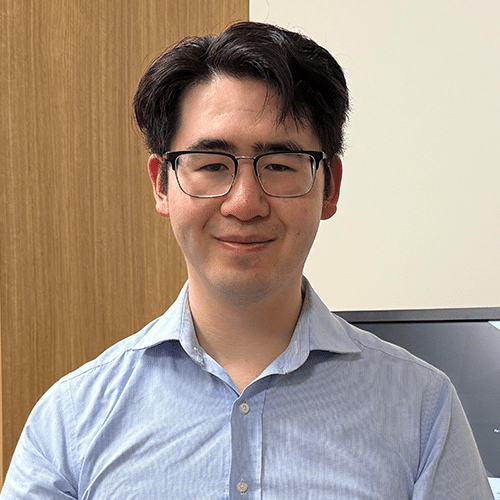
Dr Winston Dzau

The University of Melbourne, VIC

Dr Winston Dzau is a researcher at the University of Melbourne and clinician at the Royal Melbourne Hospital Department of Neurology. In his early training, he was struck by the progress that has been made in the treatment of relapsing MS with modern disease modifying therapies. This has led to his aspirations of contributing to better treatments for progressive MS.

About Dr Winston Dzau

Tell us about your current research project
Disability progression in multiple sclerosis remains an urgent unmet need. Treating progression is challenging as patients respond variably to therapies, early progression can be subtle, and different mechanisms may drive disability. Accurate markers of progression are essential for effective treatment, yet conventional markers often fail to detect subtle change or distinguish underlying drivers. Neurofilament light chain (NfL) and glial fibrillary acidic protein (GFAP) are emerging biomarkers that may better reflect disease activity and mechanisms. This project will investigate whether:

  1. Conventional biomarkers can identify progressive patients more likely to respond to treatment.
  2. NfL predicts treatment response in progressive disease.
  3. NfL and GFAP predict disease progression even in clinically stable patients; and
  4. Whether these biomarkers can differentiate inflammatory from neurodegenerative drivers of progression.
Why is your research important and how will it influence the understanding and treatment of MS?
This project has significant potential to advance medicine by addressing gaps in treatment of progressive multiple sclerosis, a stage of disease with limited therapeutic options and poor outcomes. By integrating conventional and emerging serum biomarkers, this project aims to develop a robust and pragmatic, multifactorial risk stratification tool to guide treatment decisions in progressive disease. This personalised approach has the potential to improve outcomes by identifying those most likely to benefit from disease-modifying therapies while sparing others from unnecessary treatment.

By analysing relative contributions of inflammation and neurodegeneration in individuals, this project moves beyond a clinical classification of multiple sclerosis to a more nuanced, mechanistic understanding of disease. This refined stratification will help clinicians identify the dominant drivers of progression in individuals, allowing for targeted and effective treatments. Importantly, it will also improve the design of future clinical trials by enabling better selection of participants and more sensitive outcome measures.

What inspired you to get involved in MS research?
My first contribution to MS research was in the second grade when I raised $50 for the MS Readathon. Hearing first-hand about the lived experience of people living with MS and the profound impact of the disease on them and their caregivers sparked an early curiosity in neurology and medical research.

As a neurology trainee, seeing the phenomenal progress that has been made in the treatment of relapsing remitting multiple sclerosis with modern disease modifying therapies is remarkable. However, it is clear that there is still much to learn about the treatment of progressive disease and this is an area of MS research I hope to contribute to.
What do you think has been the most exciting development in MS research?
New disease modifying therapies are always exciting innovations in MS research; and there have been many. However, the appreciation of and research around the significance of progression independent of relapse activity (PIRA) represents a historical frameshift in the way we think about MS. Specifically it acknowledges that progression occurs from the earliest stages of disease and that addressing it early has the potential to prevent long-term disability accumulation.
What do you enjoy most about your research, and what are some of the challenges you face?
What I enjoy most about research is the opportunity to contribute to shared knowledge and see discoveries translate into the way I practice medicine. It is deeply rewarding to know that careful inquiry can ultimately improve patient care. I also find it exciting to venture into uncharted territory, to ask questions that have not been asked before and explore ideas that challenge existing understanding. This spirit of curiosity is what drives progress but also defines the greatest challenge of research. Working in uncertain and unexplored areas requires courage, persistence, and, above all, patience.
Tell us an interesting fact about yourself
I enjoy singing and was once part of a barber shop ensemble that came runner-up in Victoria and was a finalist in a national Acapella competition.
Read More

Newsletter subscription

  • This field is for validation purposes and should be left unchanged.

Winston Dzau