
Dr Olivia Wills

University of Wollongong, NSW

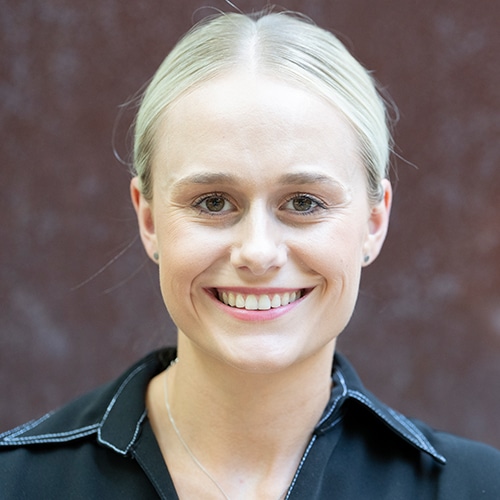
Dr Olivia Wills is an Associate Lecturer and Associate Research Fellow from the University of Wollongong and a practicing dietitian. Her study will be the first to explore how a behavioural weight loss program affects the oral microbiome in people living with MS – the community of bacteria living in the mouth that can influence inflammation and immune activity. Dr Wills’ research aligns with what she feels matters most to people living with MS – tangible, evidence-based ways to improve health and wellbeing – which she finds immensely rewarding.
About Dr Olivia Wills

TELL US ABOUT YOUR CURRENT RESEARCH PROJECT
Nearly half of people living with multiple sclerosis (MS) are affected by obesity, which can worsen symptoms and reduce treatment effectiveness. While lifestyle programs focusing on healthy eating and exercise can improve MS outcomes, not everyone benefits equally. One reason may be differences in the oral microbiome, the community of bacteria in the mouth that can influence inflammation and brain health.

This study will be the first to explore how a behavioural weight loss program affects the oral microbiome in people living with MS. By identifying whether beneficial bacteria increase alongside improvements in symptoms like fatigue and mood, we aim to uncover new biological links between the microbiome and MS. The findings will provide important pilot data for future, larger studies to support personalised, microbiome-informed approaches to MS management and treatment.
WHY IS YOUR RESEARCH IMPORTANT AND HOW WILL IT INFLUENCE THE UNDERSTANDING AND TREATMENT OF MS?
This research explores an emerging but understudied factor in MS - the oral microbiome, the community of bacteria living in the mouth that can influence inflammation and immune activity. Because of the close proximity between the oral cavity and the brain, changes in oral bacteria may directly affect neurological health and disease activity, as has been evidenced in other neurological conditions such as Alzheimer's and Parkinson's disease. Yet its role in MS remains largely unknown.

This study will uncover whether healthy lifestyle habits promote beneficial bacteria linked to better MS outcomes. It may also identify microbial profiles that predict who responds best to treatment. Hence, findings from this project will advance understanding of how the microbiome influences MS and inform personalised, microbiome-targeted strategies for improving disease management and treatment effectiveness.
WHAT INSPIRED YOU TO GET INVOLVED IN MS RESEARCH?
During my undergraduate studies in Nutrition and Dietetics, I had the opportunity to work on a research project exploring links between dietary intake and brain imaging outcomes in people living with MS. This was the first time I truly understood what MS is and how it can affect daily life. I also realised that while medications are vital, diet and lifestyle management were often overlooked and underrepresented in MS care.

With my background in dietetics, I saw a real opportunity to change this. Over the course of my research program, my interests have expanded to understanding how behaviour change strategies can make healthy habits more sustainable, and how translational research can bridge the gap between science and real-world clinical practice. As a practising clinician, I’m continually motivated by the people I work with, their experiences remind me why research must stay grounded in what is clinically relevant and truly improves patient outcomes.
WHAT DO YOU THINK HAS BEEN THE MOST EXCITING DEVELOPMENT IN MS RESEARCH?
Research groups around the world are working tirelessly to find a cure and improve outcomes for people living with MS which is truly inspiring. For me, one of the most exciting developments has been the growing focus on brain health as a central concept in MS care. The updated MS Brain Health: Time Matters in MS report has provided a global framework that emphasises the importance of early, proactive, and holistic management, combining pharmacological treatments with healthy lifestyle behaviours. This has created a real shift in the field, with clinicians and researchers now singing from the hymn sheet in terms of promoting long-term brain health and self-management as mainstream elements of MS care.

This focus also aligns with emerging areas like microbiome research, which is helping us understand how lifestyle factors such as diet, exercise, and body weight can influence inflammation, brain health, and overall MS outcomes.
What do you enjoy most about your research, and what are some of the challenges you face?
One of the most rewarding parts of my research is that it directly aligns with what matters most to people living with MS. I love that it produces tangible, translatable evidence, research that people can take away and 'do' something with to improve their health and wellbeing. Seeing those real-world impacts makes the work so meaningful.

One of the biggest challenges I face is the “noise” surrounding nutrition and lifestyle science, where strong opinions can make it difficult to separate fact from fiction. Communicating credible, evidence-based advice in a clear and balanced way takes time and persistence! Fortunately, I’m surrounded by an inspiring community of MS researchers and clinicians who share my passion for improving the lives of people living with MS through evidence-based, person-centred care.
TELL US AN INTERESTING FACT ABOUT YOURSELF
I spent my childhood as an elite artistic gymnast, training 25+ hours a week for over 15 years. I won 7 consecutive State championships and am a two-time National Champion! I thank gymnastics for the incredible work ethic it has taught me which has certainly translated into my academic career.
Read More

Newsletter subscription

  • This field is for validation purposes and should be left unchanged.

Olivia Wills