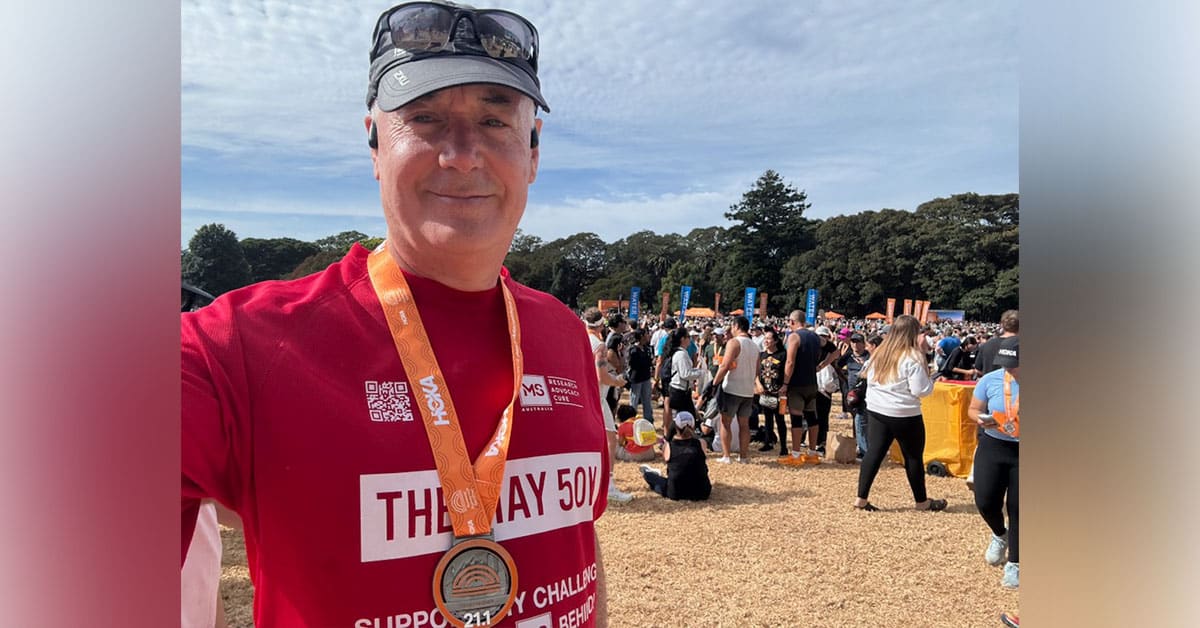
I am – along with nearly 8,000 other Australians – in a sprint to the finish to get a few more kilometres done and a few more dollars raised for this year’s May50K!
I’ll finish with an attempt at another half marathon and – even though I’ve reached my fundraising target – I am seeking even more dollars to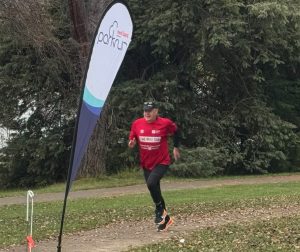 support our brilliant MS researchers.
And I’ve been inspired every step of the way by my cousin Claire, who lives with primary progressive MS, and my niece’s partner, Joseph, who has relapsing remitting MS. Two very amazing and resilient people who motivate me every single day.
The funds we collectively raise through the May50K are helping us get better treatments, better care, better understanding and, ultimately, a cure.
So, a HUGE thank you to everyone who is participating in the May50K, supporting participants, or donating to their campaigns. You are making great research happen. And this is so important at a time when government support for research has been stuck in second gear.
One important research initiative we are developing with our Canadian counterpart, MS Canada, is gathering steam. This is focused on prevention and ultra early detection.
We know that if we can find appropriate biomarkers for MS, we can identify people in the very early stages of MS and intervene with disease modifying therapies to effectively stop MS before it starts.
New research out this week offers hope that a simple blood test could help identify people at high risk of MS in time to act before damage begins.
As the researchers have said, the best cure for neurological diseases like MS is prevention.
For World MS Day (May 30), we will release a statement from our recent workshop on the emerging global prevention and early detection research collaboration.
Also for World MS Day and its diagnosis theme, we are launching some amazing new resources, developed with MS Nurses Australasia, for people newly diagnosed with MS.
Look out, too, for the superb online learning course on MS Symptoms and Diagnosis, developed here in Australia by MS researchers at the Menzies Institute for Medical Research in Hobart, with support from MSA.
Great resources for all.