Lived experience to guide medical research
The importance of embedding lived experience in medical research is being increasingly recognised in Australia and internationally.
Involving people who live with chronic conditions such as MS aims to ensure that research meets the real needs and is sensitive to the experience of living with the condition.
The lived experience perspective is essential throughout the research pipeline – from setting the goals, to designing and conducting research, through to communicating and implementing the outcomes.
One emerging issue in MS research is the possibility that in the future, we may be able to screen for MS, and screen for very early disease, prior to the onset of MS symptoms.
Screening for increased risk of MS – need for lived experience perspective
Many risk factors for developing MS are known, include genetics, low UV and vitamin D exposure, smoking, adolescent obesity, and infection with the Epstein-Barr virus (EBV).
This opens the possibility of being able to identify people at higher risk of developing MS and researchers are working to develop algorithms to do this.
At present, this type of screening exists only in the realm of research, as scientists try to understand what causes MS and how disease develops.
In future, we may be able to identify people at higher risk of MS, for closer monitoring and very early intervention if they later develop MS.
Screening for higher risk of MS could have many implications. Would it cause unnecessary anxiety? How could it impact loved ones? Are there insurance implications?
Screening for very early MS – need for lived experience perspective
As well as identifying higher risk, there is a possibility that in future we may be able to screen for MS before the onset of specific MS symptoms, or much earlier than we can currently diagnose it.
In fact, MS is sometimes diagnosed incidentally already, when people with no symptoms or mild symptoms have brain imaging for unrelated reasons, and lesions are discovered. Our lived experience expert panel (LEEP) member, Alex McKay, experienced this scenario.
There are no blood tests currently available to diagnose MS or to detect MS before the onset of symptoms. However, discovery of MS blood “biomarkers” is a very active area of research internationally and in Australia, including MS Australia-funded projects.
If screening tests for very early identification of MS were available, how would people feel about themselves or their family being screened, and what would be the impact of test results?
Lived experience shapes the arguments for and against family screening for MS
As part of their ‘Patient Voices’ series, Multiple Sclerosis Journal invited people with MS and their families to explore the arguments and against screening for MS for their families.
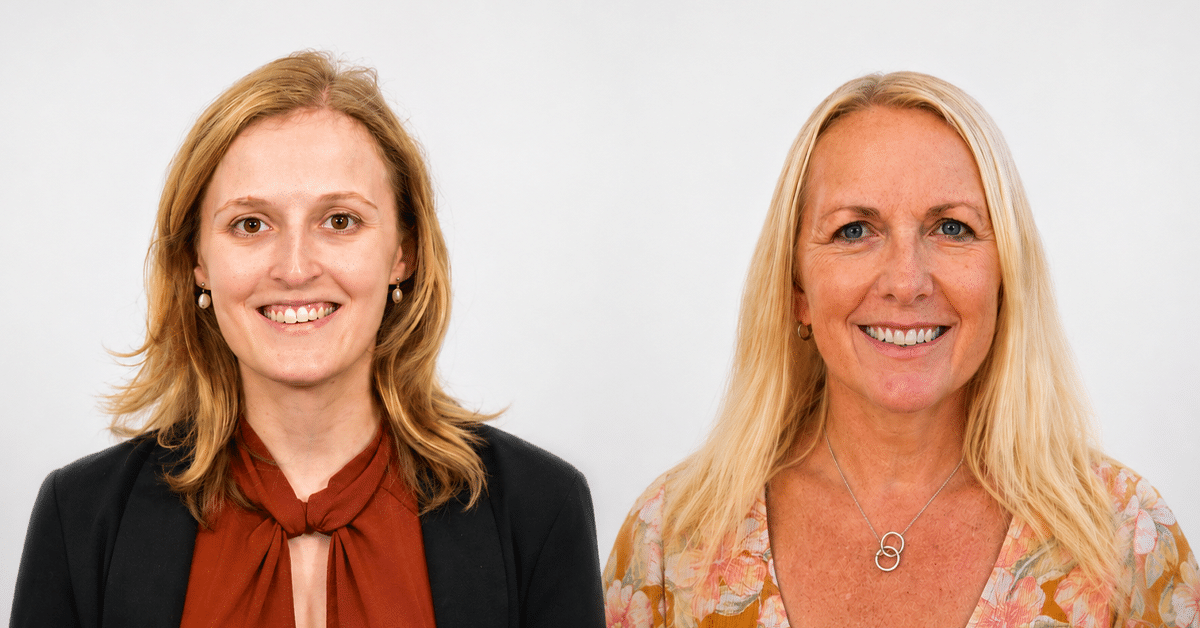
MS Australia’s LEEP members Rachel Fallis and Rebecca Small argued for screening.
Rachel not only lives with MS, but her life was touched by MS years earlier when her 3 year old twins lost their grandfather to MS. Rachel has carefully considered the elevated family risk carried by her children and would welcome the opportunity for screening for her family. For Rachel, knowledge is power. ‘With the right support and shared decision‑making, a positive screen isn’t just a warning; it’s a chance to make informed choices early and live proactively instead of reactively’.
As daughter of a mum with MS, Rebecca understands her elevated risk of developing MS. She also believes that early knowledge through screening would outweigh concerns: ‘I’d value the transparency and opportunities to plan”.
You can read Rachel and Rebecca’s perspective in full here.
Others do not welcome family screening now. Author Sharon Roman lives with MS and her family focus on a healthy lifestyle including diet, sun exposure/vitamin D and exercise, as the currently available ways to reduce risk.
She argues that until therapies or vaccinations to prevent MS are available, screening for MS is a moot point. Sharon says: “While not a panacea for MS, for my family, knowing that we are living our best lives with awareness and healthy habits, not fear, is intervention enough.”
You can read Sharon’s perspective in full here.
MS neurologists, including Australian Professor Bruce Taylor considered these viewpoints in a thoughtful commentary.
Enriching MS Australia’s research and advocacy with lived experience
MS Australia’s LEEP continue to enrich our work in research and advocacy with exceptional depth of insight, pragmatism and good humour.
We congratulate Rachel, Rebecca and the other authors on this important contribution to the literature on MS screening, as part of a wider global conversation on prevention and early intervention in MS.